
Chapter 1 Part XII

After working a few weeks bartending until 4am
And sucking down fried food hastily in a kitchen
The sleep schedule becomes
A little screwy
And the mind tends to become
A little cloudy
So I returned to my time-tested remedy
And ran when I could…and I found myself
At 4:30am in Central Park
With calm and steady strides and my past
Victories reignited in my soul and there I am:
800 meter Olympic final, about to win America the gold
Since Wottle in 1972
When a man passes me and I think,
“Don’t think so, buddy,”
And I sprint past and for the next 30 minutes
We’re racing neck and neck until I break him
And while I run away he yells,
“Thanks brother!” and I keep running
For another 5 minutes until turning into the bushes
And vomiting up chicken fingers, Olympic champion.
Next night my muscles are aching, trembling
And I knock a drink over on to a woman’s lap
And she shrieks, “This is a new dress you shithead!”
And the shift manager grabs my shirt and pulls me to the back,
Eyes bulging, “One more dumbass move like that and you’re fired,”
Spittle spraying my face, but I can’t help but smile,
And he asks, “Why the fuck are you smiling?”
And I want to say, “Because I’m an Olympic champion,”
But I say nothing and return to work.
Subscribe below:

According to Mary Meeker’s annual Internet Trends report, in 2014 people uploaded an average of 1.8 billion digital images every single day. To put this in perspective, every two minutes humans took more photos than existed in total 150 years prior. GOD DAMN. No doubt this number has increased substantially in 2018…as more people have phones with cameras and meals that must be posted on Instagram. With such quantity, such instantaneous feedback, and such convenience, has the quality of photographs improved or suffered? What are the ingredients of a quality photograph? Perhaps the clarity and shock-value of particular photographs have improved, but has something subtle been lost when you don’t have to stay up all night developing a photograph in a dark room, but instead can press a few buttons and upload the image on to social media? Does the search for meaningful subjects become compromised when you can instantaneously capture and develop/add a filter to an image? How much can someone’s character be judged by the photographs they choose to take? I don’t know. But by looking at the past work of Margaret Bourke-White, a photojournalist between 1925-1960, answers to these questions may be reached. Because Bourke-White was, interestingly, both a first and a last artist, meaning one of the first photojournalists to make a career out of taking photos, but also one of the last journalists who had risen to success through the old fashioned way of photography. Whether she created timeless art is for you to judge. But her art aside, she was also a powerful woman who lived on the edge…here is her life:
Margaret Bourke-White was born on June 14th, 1904. As a child she showed a sense of adventure and a curiosity for life, as one summer she raised two hundred caterpillars under rows of upside-down glasses on a dining room windowsill.
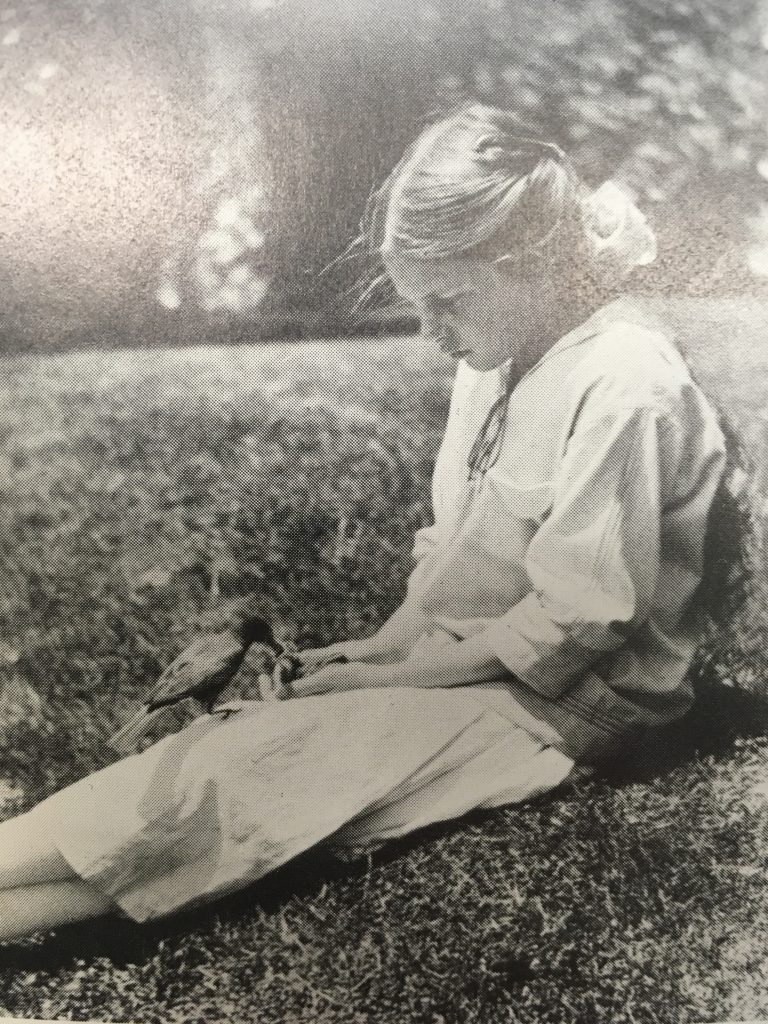
She was very close with her father, Joseph White. He’d take her on walks outdoors, teaching her how to decipher between harmless and dangerous snakes, and how to pick them up without fear. With her father’s introduction to the world of snakes, Margaret decided to become a herpetologist. Her motivation to study snakes was fueled by a desire to travel and a desire to do “things that women never do,” (MBW, 14). Her father encouraged her herpetology by constructing wire cages to house her growing collection of snakes and turtles. Margaret would major in herpetology when she enrolled at Columbia University at the age of seventeen.
Joseph White was an amateur, though passionate, photographer. He was a stern, silent man who was not to be disturbed in the house while he was “thinking.” Joseph was an inventor who worked with printing presses, earning numerous patents such as the first printing press for Braille. During his life he would dedicate his “heart and mind to a tangled love affair with the rotary press,” but due to failed investments would never become wealthy (G, 101). He was, “Always tinkering with lenses and working on devices to make exposure settings simpler for the amateur [photographer]…” (MBW, 20). He would take Margaret on trips to factories where he was supervising the setting up of presses. On one of these trips, Margaret witnessed the flowing of metal and flying sparks in a foundry, and would write about the experience later in life: “To me at that age, a foundry represented the beginning and end of all beauty.”
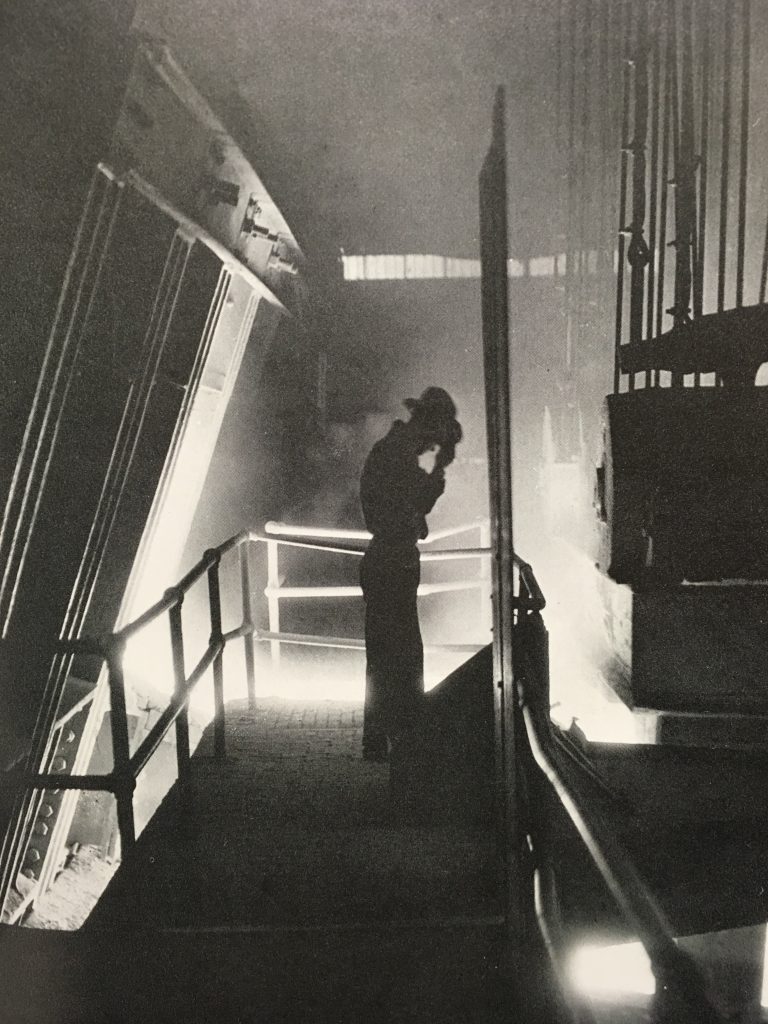
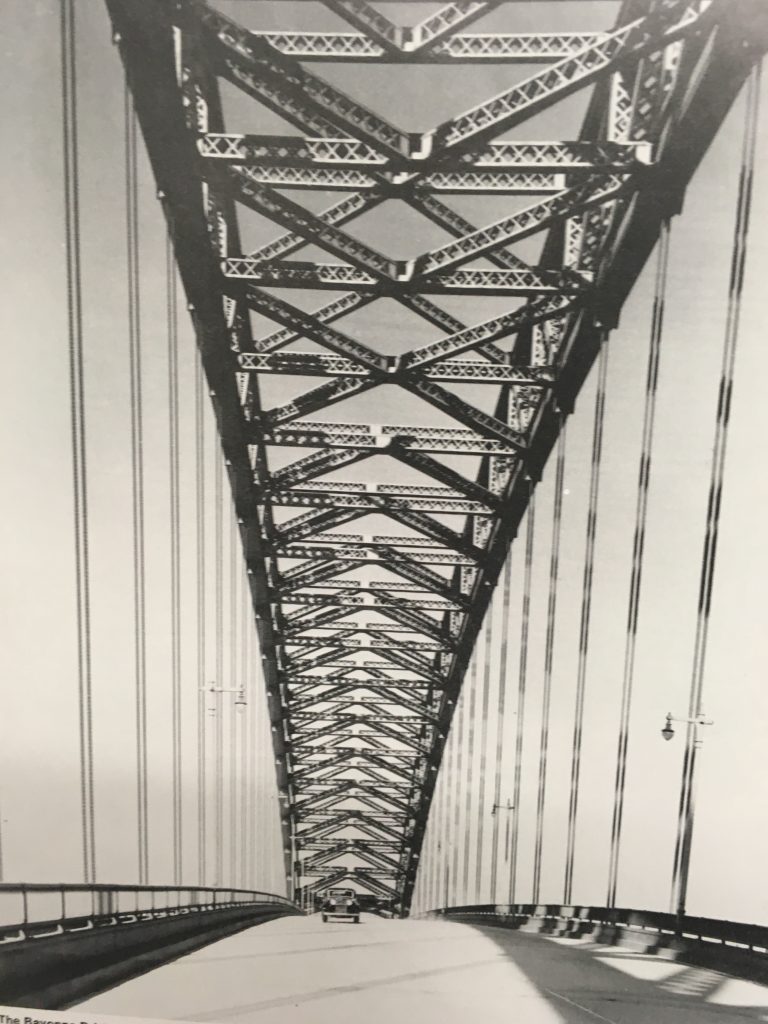
Her father instilled in her a love for industry and work. On industry, Margaret would write:
“Ore boats, bridges, cranes, engines – all are giant creatures with steel hearts. They all have an unconscious beauty that is dynamic, because they are designed for a purpose. There is nothing wasted, nothing superficial. The realization of this idea will grow. It reflects the modern spirit of the world,” (G, 112).
And on her father instilling a work ethic, Margaret would write:
“His [Joseph White] positive contribution was to build in me the deepest respect for work. Work is a religion to me, the only religion I have. Work is something you can count on, a trusted, life-long friend who never deserts you.”
While a freshman at Columbia University in 1921, Margaret’s mother bought her a camera, a 3¼ x 4¼ Ica Reflex. It cost $20 and had a crack in the lens. At Columbia, even though she majored in herpetology, Margaret would also study art. She’d hear a lecture by the artist Arthur Wesley Dow, who was teaching at Columbia University Teachers College, and would later use his Orientalizing design principles in her photographs of gardens and estates in Cleveland (G, 68). In addition, the teachings of Arthur Wesley Dow grounded her thoroughly in the potential of abstraction from realistic observation (G, 111).
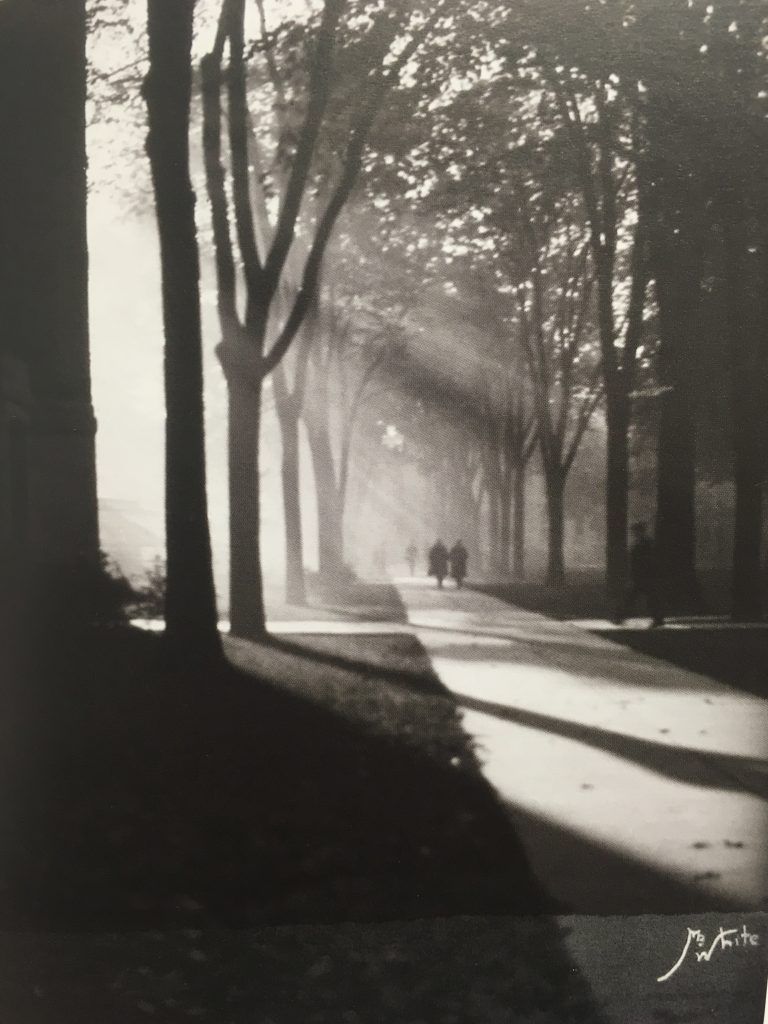
Then, by lucky chance (according to Margaret) she took a two-hours-a-week course in photography under the late Clarence H. White, “…not because I wanted to take photographs but because the course dealt with design and composition as applied to photography.” But in her notes later in life she also reflected, “I think my great love for my father and the fact that he was so much interested in photography was a strong added incentive when I began work at the Clarence H. White School,” (G, 24).
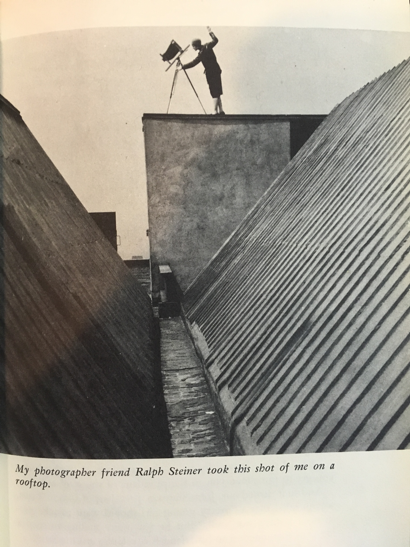
Margaret wrote in her autobiography that, “…Clarence H. White was a great teacher and the [photography] seed was planted.” One of her classmates, Ralph Steiner, would become a colleague for life, giving her technical advice on photography over the years. In their first class together, Ralph said Margaret had, “Terrible, intense, staring eyes that didn’t blink,” like the cold-bloodied animals she studied. When Margaret would study at Cornell, she would describe Steiner as a “superbly sharp honest craftsman,” who “caustically talked me into a fierce reversal of the viewpoint that a photograph should imitate a painting,” (MBW, 30). He would take photos of Margaret later in life:
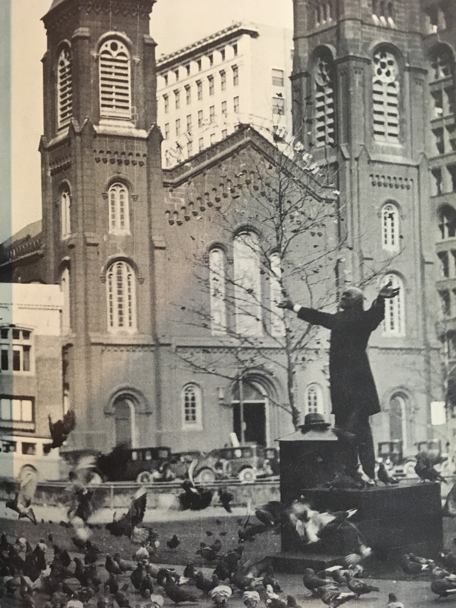
After a disastrous marriage and attending numerous universities after Columbia University, Margaret would move to Cleveland into a tiny apartment by herself. She’d develop films in her kitchen sink, rinsing them in the bathtub. The first photograph she would sell commercially would be a picture of preacher and pigeons, which she sold to the magazine of the Cleveland Chamber of Commerce for ten dollars:
In 1927, Margaret was constantly visiting industrial sites, saying, “I can’t describe the feeling of rapture and real ecstasy that I had when I got to all that industrial activity,” (G, 74). The majority of her photographs around this time concentrated on dynamism, movement, construction, process, teeming steel, the pouring of metal, and coke being quenched. She began to realize the democratic power of photographs, as, “Even in its most complex combinations, anyone can understand most photographs.”
The same year a friend of Margaret’s suggested that she bring her industrial pictures to the Union Trust Company. The Union Trust Company was desperate for covers for their monthly magazine called Trade Winds. After they saw Margaret’s portfolio, they agreed to give her $50 for its cover, a picture of the High Level Bridge. They would continue with this monthly payment contract for the next five years. As Margaret began to receive more money for her work, her certainty in her path grew:
“…I didn’t know exactly what direction I was headed except that it was upward. I didn’t know exactly what my goal was. I didn’t see a fixed goal but I knew that I was progressing and that I would succeed,” (G, 78).

In 1927 American industry was reaching a peak of profits and productivity. The respect for business was reaching a kind of national reverence. The time was ripe for someone like Margaret to inform the capitalist that in the means of production lay the sparks of high art. Between 1921-1929, industrial production in the United States nearly doubled. President Calvin Coolidge would say, “The man who builds a factory builds a temple, the man who works there worships there.” And Henry Ford believed that “machinery is the new Messiah.” Margaret’s timing was perfect, and her pictures of dynamo in the Niagara Falls Power Plan in 1928, taken for the state set of Eugen O’Neill’s Dynamo, earned Margaret the reputation of “The girl who discovered the dynamo,” (G, 81).
But her breakthrough would come when she went to the Otis Steel plant to take photographs. When she arrived, the pouring of the metal gave off more heat than light, and Margaret would end up improvising with flares to achieve better lighting. In addition, a few days after she started work, a corporate publicist named John Hill wrote, “I had a call from the night superintendent of the mill. He demanded that I keep ‘that girl out of the plant,’ he said. ‘She’s crawling all over the place, and the men are stumbling around gawking at her. Someone is going to get hurt, and besides, they’re not getting any work done.’” Margaret replied, “I’ll wear blue jeans,” and returned to the mill. This would be one of many examples of Margaret experiencing backlash in a male dominated industry. The picture of the mill’s two hundred-ton ladle would win her the first prize at the Cleveland Museum of Art show in May of 1928. She would later write, “I feel that my experimental work at Otis Steel was more important to me than any other single thing in my photographic development.”
Work was becoming the main focus of her life. She would write Nikolai Sokoloff, one of her many lovers:
“You have never seen me at work. You cannot know how my work has been all of me, and how unwilling I have been to let anything outside of my work seem important to me – Everyone here knows how independent I am and how unapproachable I am. I made up my mind that I would not allow myself to get fond of anyone until I am over thirty. I shall abide by that, because nothing is so important to me just now as to do something in pictures in black and white with the romance and beauty of industry that has never been done before…I have made up mind quite definitely that I cannot fall in love with anyone until I am thirty…” (G, 90).
Even though Margaret was not the first woman to take industrial photographs, she was the first woman who was commercially successful in the field. She was a pioneer for bringing the image of industry to the attention of the American public and giving it a glamour and power it had not had before (G, 90).
In early 1929, Henry Luce saw her Otis Steel pictures in the rotogravure section of a mid-western newspaper. He sent a cable to Margaret which read:
“HAROLD WENGLER HAS SHOWN ME YOUR PHOTOGRAPHS STOP WOULD LIKE TO SEE YOU STOP COULD YOU COME TO NEW YORK WITHIN A WEEK AT OUR EXPENSE PLEASE TELEGRAPH WHEN – HENRY R LUCE PUBLISHER TIME THE WEEKLY NEWS MAGAZINE.” Margaret raced to New York to meet him.
Henry Luce told her that he wanted her to be the first photographer for Fortune (which had initially been planned to be called Power), his new magazine. In the magazine “pictures and words should be conscious partners,” and “the camera would act as interpreter.” He wanted the magazine to have “the most dramatic photographs of industry that had ever ben taken.”
Luce knew that his magazine Fortune and eventually his other magazine, Life, were new means of communication and would change the very nature of reporting. In the past, a magazine would write a story, then a staff would look through an index of important images. Now, the magazine often had the story written, not before, but after the photographs came in (G, 109).
Fortune’s popular appeal was its illustrations, and Bourke-White was the force behind this appeal. She would make industry a theatre (G, 110). In addition, Fortune would feature pictures of politicians caught in mid-gesture, or of statesmen seen through half-opened doors, and these un-posed photographs were revolutionary. The public had never seen this new form before and it was a breakthrough for the press (G, 110).
Throughout this revolution, Margaret was on the center stage. And being a woman enhanced the spotlight. Margaret didn’t play the game the way that women were expected to, with a “sweet and retiring demeanor,” (G, 150). Her famous, often repeated line was, “Nothing attracts me like a closed door. I cannot let my camera rest until I have pried it open, and I wanted to be first,” (G, 125). When asked why she was often single, Margaret would reply, “I don’t need someone else to cling to and I don’t have the need of security that a lot of women do. First of all, not financial security, but even more important, emotional security,” (G, 321). A man told her once she had a lens for a heart. She took it as a compliment and happily repeated it (G, 273).
In 1936 Henry Luce received a telegram from Archibald MacLeish:
“The great revolutions of journalism are not revolutions in public opinion, but revolutions in the way in which public opinion is formed. The greatest of these, a revolution greater even than the revolution of the printing press…is the revolution of the camera…The camera shall take its place as the greatest and by all measurements the most convincing reporter of contemporary life,” (G, 172).
Today, as photographs are so integrated into our daily lives and culture, it’s difficult to comprehend the revolution of photographs becoming a part of the news.
In 1936, Luce decided the world needed a picture magazine, and came up with the idea for Life magazine. He wrote in the first draft of the prospectus: “We have got to educate people to take pictures seriously, and to respect pictures as they do not now do…While people love pictures, they do not respect them,” (G, 174). He hired Margaret two months before publication. Margaret was the only woman and the only big-camera photographer for Life. Her first assignment was the chain of dams that the Public Works Administration was constructing in the Columbia River Basin to control flooding, which would go on the cover of the first issue.
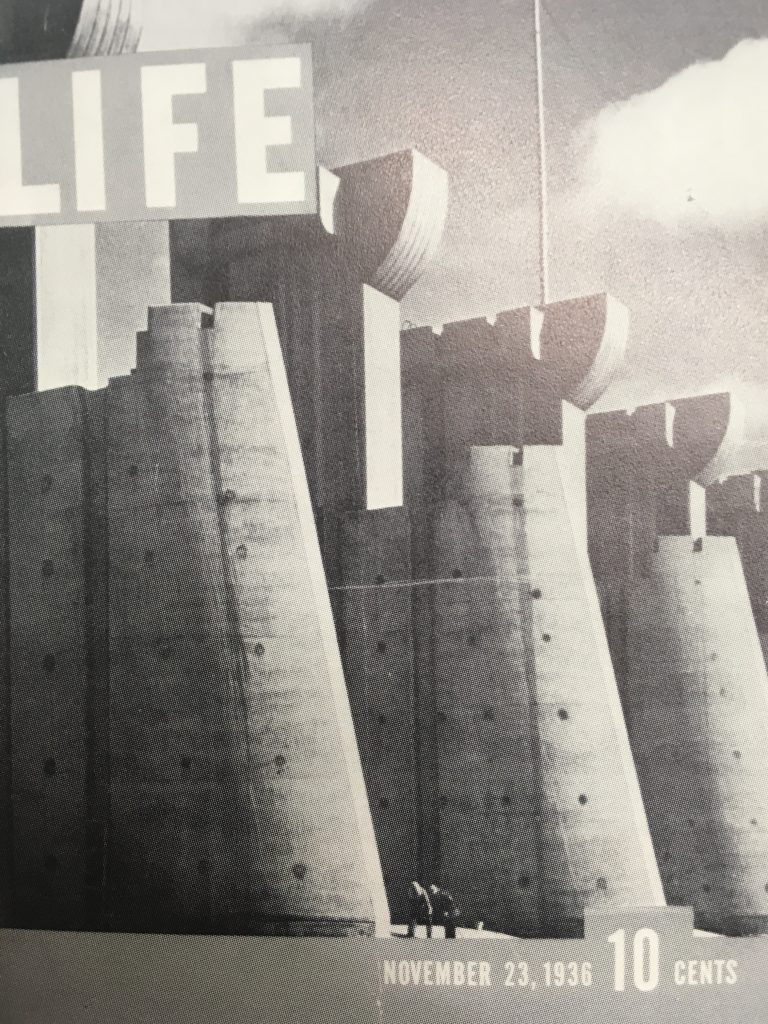
Before Life, no other illustrated periodicals in the world gave the news (or any other kind of story) principally and coherently in photographs. In Life Margaret would pioneer the picture essay, as in the first issue the lead story was about what normal, useful, pleasant behavior was like out West, which was the first true photographic essay in America, (G, 181). Margaret would say, “One of the things I really care about is being given credit for having this essay style,” (G, 180).
In comparing Life to new forms of media and news today, it’s interesting to note that Life didn’t turn a profit until 1939, three years after the first issue. And, the editor at Life had to teach his staff to read pictures, with captions at first being written to help teach the public how to read evidence. People were concerned that the picture magazine would kill off reading.
But reading was not killed off, and photos in Life were seen as the great equalizer, as an ad in Life in December of 1936 wrote:
“The appeal of pictures is universal…the cook and taxi-driver, then may find something in LIFE as interesting as you do,” (G, 183).
Henry Luce saw photography as a kind of remedy for the disheartening effects of the news. In 1952, Life reminded its readers that, “Back in 1937…Henry R. Luce…predicted that photography could be useful in correcting that really inherent evil of journalism which is its imbalance between the good news and bad,” (G, 187).
While working for Life, Margaret would engage in other projects, such as the collaborative book, You Have Seen Their Faces, with her famous novelist husband: Erskine Caldwell. The book, a 1937 report on sharecropping and an indictment of the practice, would influence the country’s legislation and establish a new genre: a book in which photographs and text have equal weight. A New York Times reviewer of the book wrote, “The pictures produce such as an effect, indeed, that it is no exaggeration to say that the text serves principally to illustrate them,” (G, 194).
*
Margaret Bourke-White’s life, as she rode on top of the wave of photojournalism and the first successful photographic magazines in the United States, would be full of adventure. She captured the Dust Bowl, the Soviet Union’s five year plan, she was the only photographer who captured Stalin smiling, she was in a submarine in the Mediterranean that was torpedoed and had to abandon ship, she went on a bombing mission attack on Tunis as the first woman to accompany a U.S. Air Force on a combat mission, she would be in Moscow during the bombing in July of 1942…
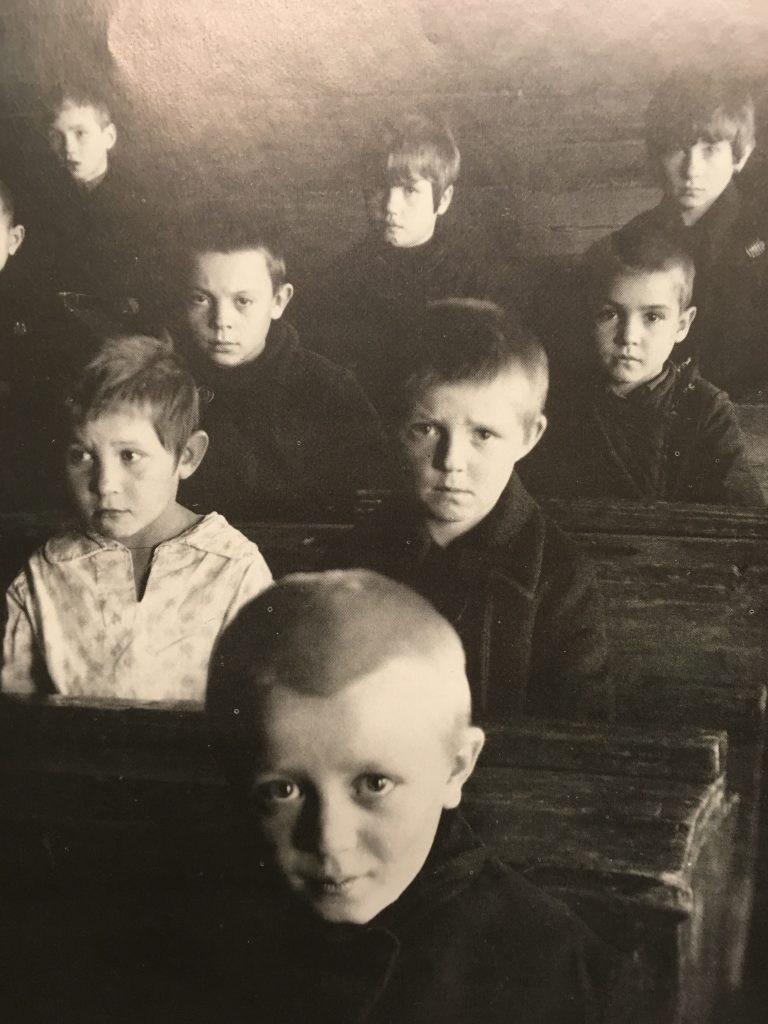
…she flew with Hamp Atkinson and Paul Tibbetts (Tibbets would, two years later, drop the first atomic bomb on Hiroshima), she liberated Buchenwald concentration camp…
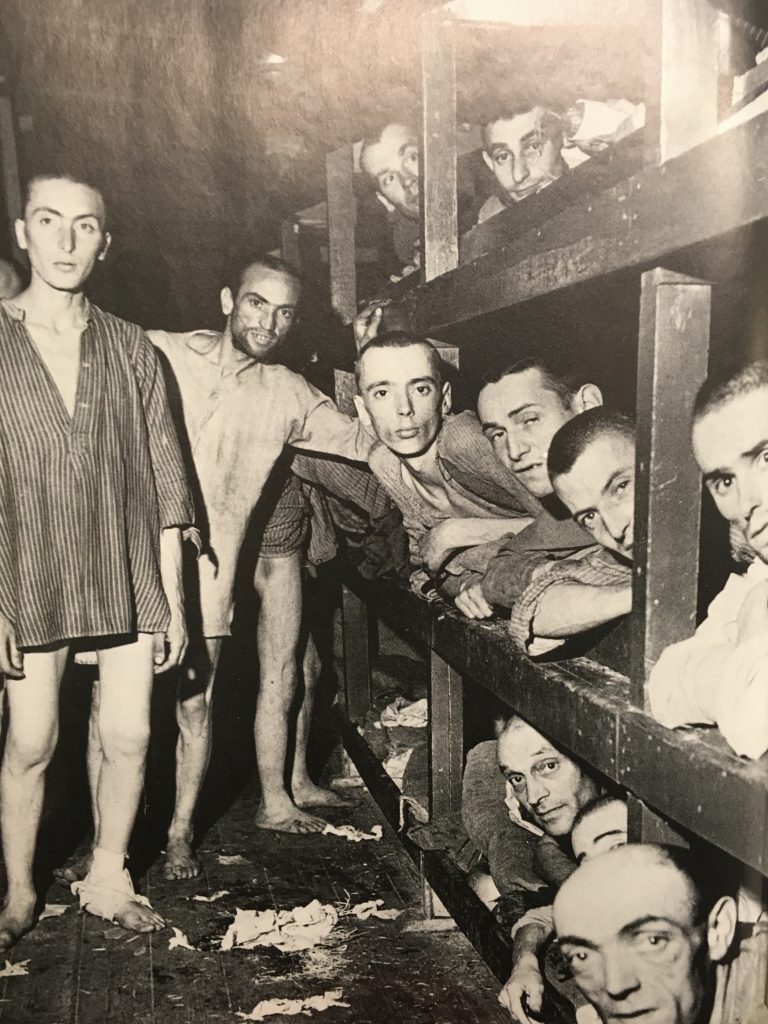
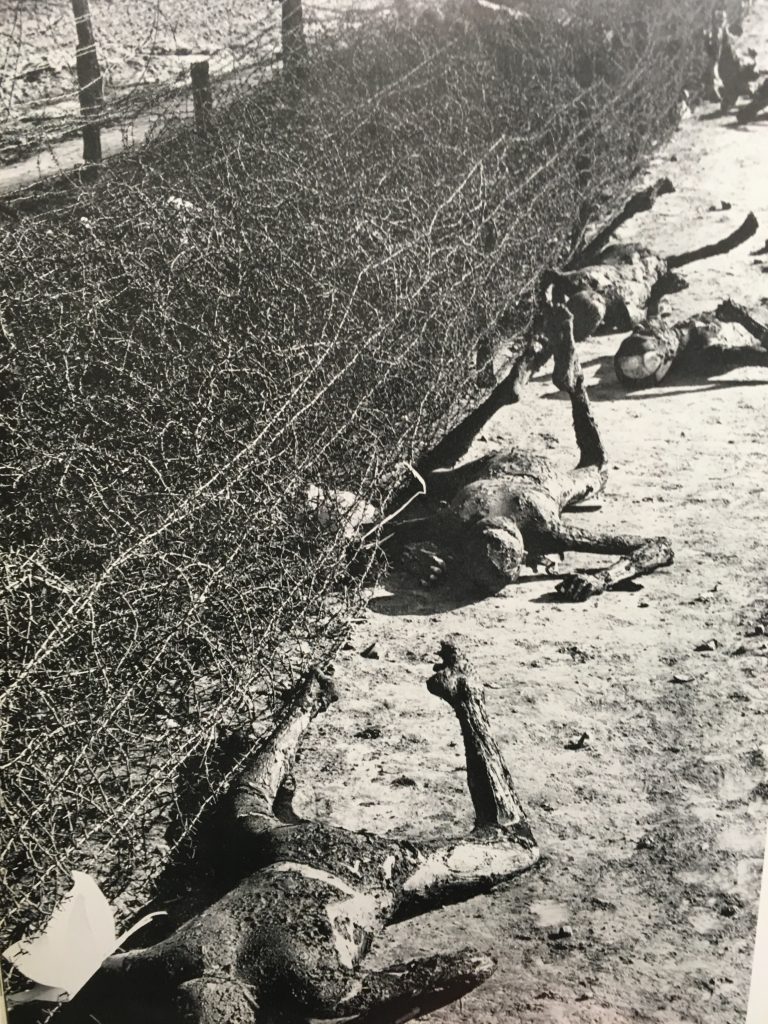
…she photographed the iconic image of Mahatma Gandhi sitting behind his spinning wheel…
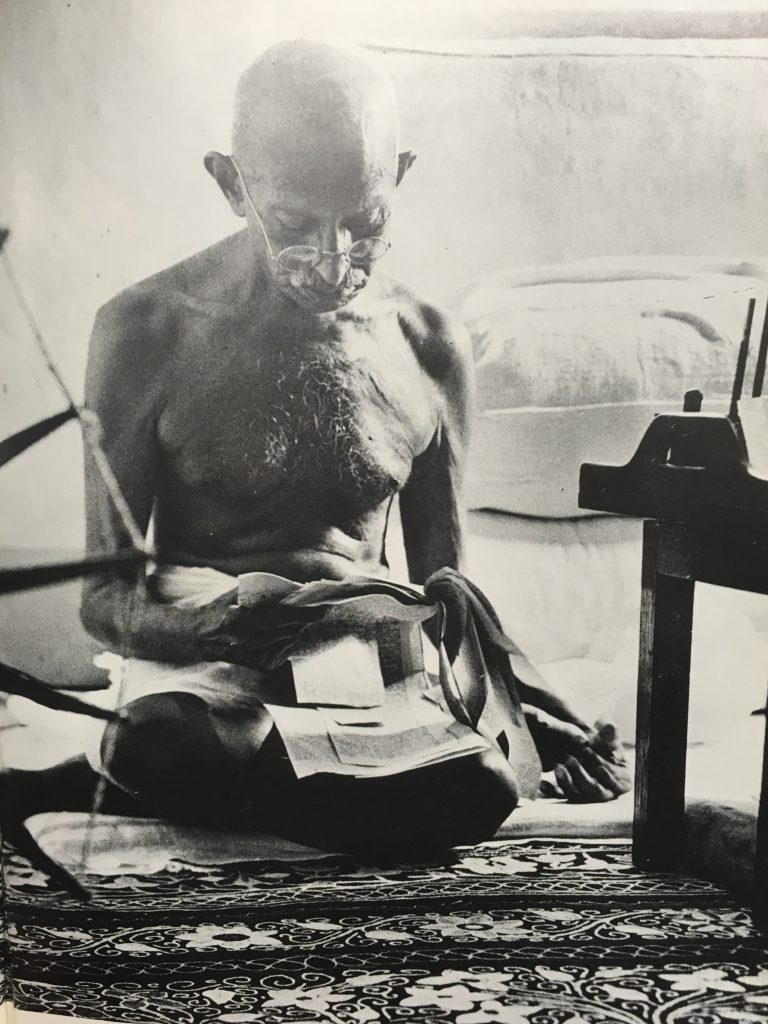
…then interviewed him the day he was assassinated, and she covered the Korean War.
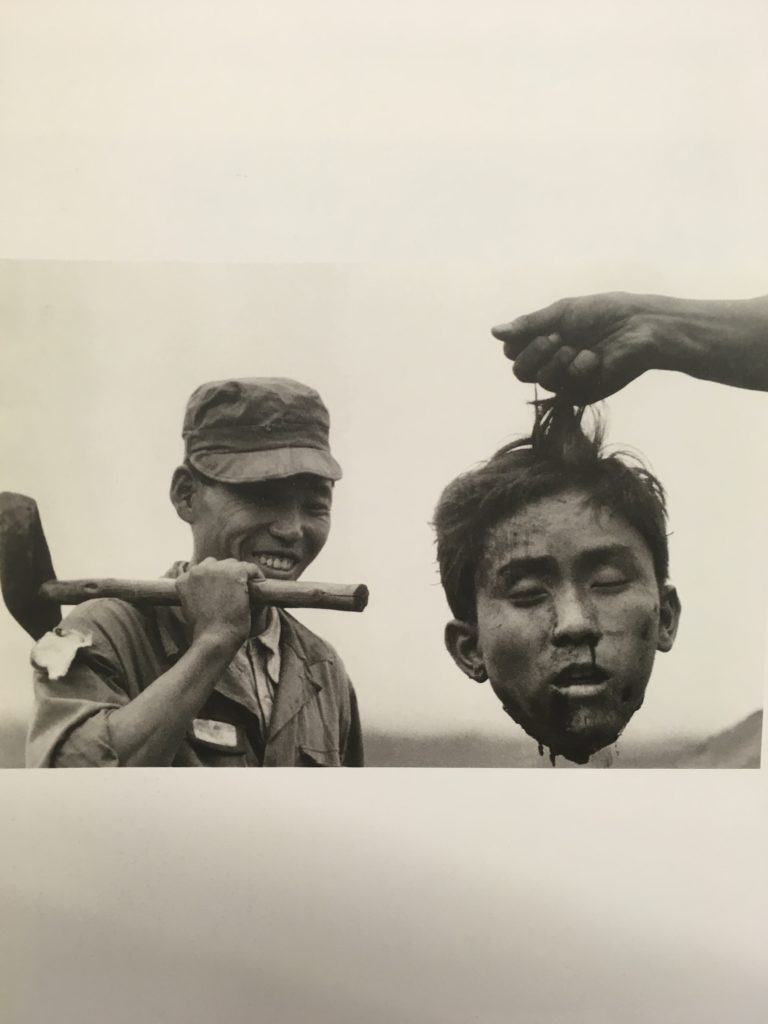
So it seems a cruel twist of fate that a life of such action would be crippled by Parkinson’s Disease in the last eighteen years of her life. As Margaret developed Parkinson’s (she wouldn’t tell friends or co-workers for years after showing symptoms), she would say to a friend, “I feel like a prison in my own self,” (G, 343). She would write, “Parkinsonism is a strange malady…it works into all paths of life, into all that is graceful and human and outgiving in our lives, and poisons it all.” But despite the inner torment, Margaret never claimed that life had treated her unfairly, as her friend Jack Hofkosh noted, “She never asked the one question everyone asks without fail: “Why me?’ The question forced itself on her mind, but she adamantly refused to give it space,” (G, 351).
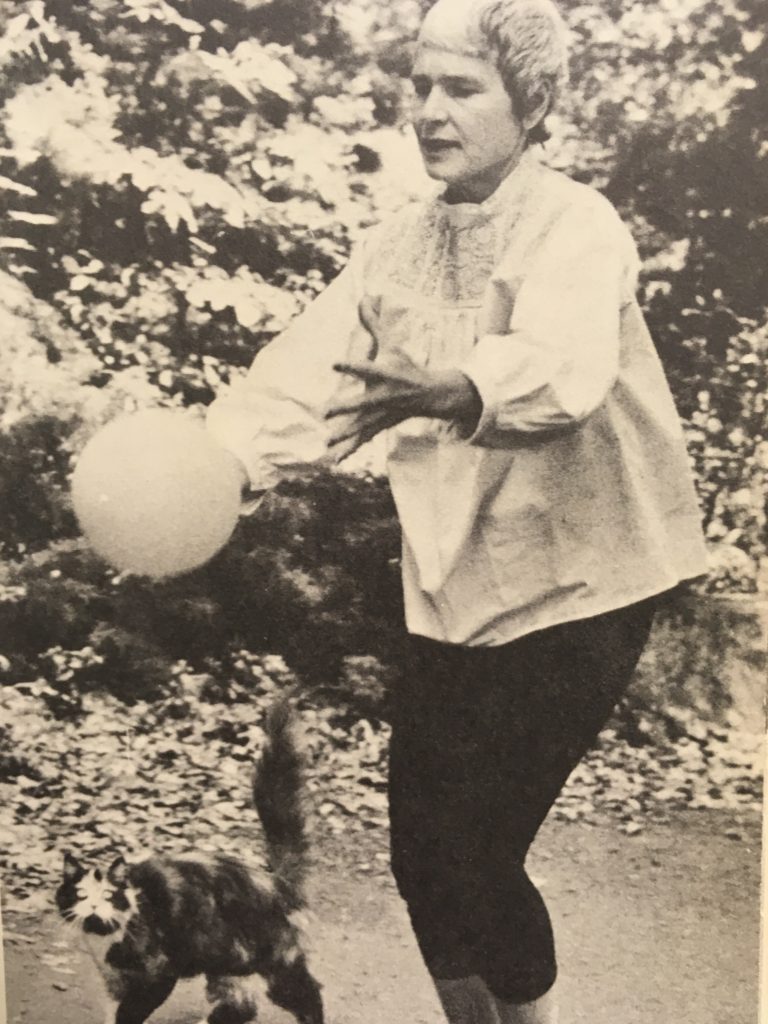
In fact, in 1955, two years after experiencing Parkinson symptoms, Margaret asked Henry Luce to promise her the assignment for the first trip to the moon. Luce gave her his blessing (G, 347). To the end, Margaret loved life and adventure, overcoming obstacles in stride, even when they seemed unexplainable, as she would write near the end of the life:
“…from whence come the trials by fire. Seems so purposeless, so underserved. Undeserved is something we cannot judge and the very word had to be exiled outside of our consciousness or we could waste what little life we have ahead by complaining that we don’t deserve such fate.” (G, 351).
Subscribe below:

Flash Nonfiction: 1 minute read:
This morning at 7:45am while walking my bulldog, Hank, I saw a young man playing with his puppy in an open field. The puppy was teasing the man, running away with that awkward puppy gait. I smiled to myself, remembering Hank doing the same thing five years ago.
When the man caught up to the puppy he grabbed its collar, shoved it to the ground, and began smacking the puppy across the face.
“WHAT THE FUCK ARE YOU DOING?” I yelled. “YOU MOTHERFUCKER! DON’T HIT YOUR DOG YOU-“
“FUCK YOU ASSHOLE. LEAVE ME ALONE. THIS DOG IS GONNA BE A FIGHTER.” He scooped up his puppy and started to walk out of the field. I ran after him, blind with rage and yelling, uncertain of how to handle the situation. The man climbed some stairs, and while we shouted back and forth I heard him yell, “I’M TIRED OF WHITE PEOPLE TELLING ME WHAT TO DO!”
“IT’S NOT ABOUT RACE. IT’S NOT ABOUT YOU AND ME. IT’S ABOUT YOUR DOG.”
“FUCK YOU. I’M GONNA RAISE MY DOG HOW I-” Then something inside of me cracked. I realized the situation at this moment was futile. My anger was for myself. Even if I could get this puppy away from this man, he’d find another one to beat. And the more I lashed out at this man, the more he would hurt his dog.
“Please. It’s not about you and me. It’s about your dog.”
“I WILL DO WHATEVER I FUCKING-” I started to beg with him.
“Please. Beat the shit out of me. Come over here and punch me in the face. I won’t fight back. I don’t care. Just don’t hurt your dog. Please. Don’t hurt your dog.” The man was at the top of the stairs.
“Just don’t hurt your dog. Hurt me. Not the dog.” He started to walk away. Then I found myself saying something I had never said before.
“Please. Don’t hurt your dog. God Bless.” The man paused, turned, then yelled back in an awkward, cracking tone, “THANK YOU,” and walked away. At the bottom of the stairs I realized I was shaking. This man would most likely keep beating his dog. There was nothing more I could do. There was such cruelty in the world. I felt fed up and finished with the world. I looked down at Hank, who was licking my leg and looking forward to the rest of his walk. “C’mon Hank, let’s go home.” I burst into tears. I wept for the next fifteen minutes on the walk back, letting Hank leisurely sniff wherever he wanted. In my apartment I wrote down what I remembered. Writing was something I could do.
Author’s Notes: A 311 service request has been filled out and the N.Y.P.D. has been contacted.
Subscribe below:

There are lifetimes
Contained in breaths
Cycles and seasons
Of birth and death
Can these mortal passing thoughts
Be merely electrical signals caught?
Briefly, instantaneously
Between the scattered synapses
Billions of electrical field gradients
Shining as varied patterns bent
As magnetic resonance images
Are anxiety and hope only the blinking battery messages?
Joy and despair chemical scrimmages?
Limitless combinations of reflective cinemas
How can these electric mazes be
Conscious of the game and change the game maybe they only
Tame or frame categorize reality to maintain, stay sane?
I should close the curtain because I’m certain
I won’t be able to sleep with the neighbor’s light
Another labored electrical device
Affecting my fading sight
I might just close my eyes tight
That’s right all right don’t fight just listen to the
Sounds of the night.
Subscribe below:

Inspired by Zach Bornstein’s New Yorker essay: A Typical Day
2 minute read:
Subscribe below:

5.5 minute read. Inspired and adapted from Wolfe’s The Far and the Near
On the edge of New York City, somewhere in the Throggs Neck neighborhood of the Bronx, there was a decrepit house with broken shutters, peeling paint, and a sunken porch. In front of the home was a crumbling walkway. Weeds twisted through the concrete cracks. If the dwelling didn’t have a narrow, shoveled path in the winter from the sidewalk to the door, a passerby would suspect abandonment. The whole property had a stifling air of slovenliness, neglect, and waste.
Every other day, a thirty-year old man named John Kosovitch passed by this house on his way to bartend in Manhattan. For the past three years he’d been walking the same route on his way to the bus stop, and often he observed an old woman leaning against a railing on the porch, smoking a cigarette. She looked as withered as her decaying home, her dark eyes seemed to be clouded by a mysterious and crushing regret, and her wrinkled face always wore a nasty scowl. Sometimes, John would wave and yell, “Hello there neighbor!” and the old woman’s wretched mien would break into a crooked, toothless smile.
John Kosovitch was a writer. At twenty-two he moved to New York City in hopes of publishing a novel or becoming a journalist, but for years he received thousands of rejections from agents, newspapers, publishers, and magazines, so he became reconciled to obscurity and manual labor. At twenty-seven, he considered applying to journalism schools, but out of the momentum of the daily grind, the various temptations and vices, and an obsession with his own work, he let the deadlines pass…
Despite growing hardened and jaded, John held on to a glimmer of hope. He had poured thousands of beers while watching the sticky foam drip down his trembling hands, lifted thousands of chairs in the graying dawn, tied thousands of trash bags and heaved them into backyard dumpsters, shoveled vomit out of clogged sinks, scrubbed rat shit out of crevices, and shuttled back and forth until the ache in his legs radiated up to the back of his neck. But beyond the physical demands which always became endurable, then habitual, it was the grasping pettiness of humanity which filled him with an unspeakable horror. It was the thousands of empty conversations, the whining and complaining, night after night hearing the same stories, the same mind-numbing stupidity, the vapid questions, observing the conniving callousness, the mean squabbles, the bleary-eyed drunkenness, the cackles of hoarse laughter. Were these the people who he was creating art for? Is this the world that would consume and spit out the triumphant products of his sensitive soul? No. The contrast between the ambitions and dreams in his heart with the sniveling demands of the patrons and co-workers was a pulsing pain…a pain that would throb in his chest whenever he was jostled by the rhythms of his occupation in the midst of the shining vision of what his life could be. So he wouldn’t play their game. No. He wouldn’t create for them…
But no matter the sinking doubt or seething anger, he held on to the glimmer of hope that he’d escape, that he’d achieve self-sufficiency through the pen, that his words would reach and touch a like-minded soul. And somehow, for the past three years, the image of the old woman on the porch smoking a cigarette became wrapped up in this shining vision. Because as much as John looked with dissatisfaction upon his situation and occupation, he was still moving; still learning; still growing. Meanwhile, this old woman was stuck in her dilapidated home, on the edge of death, wasting away. I still have a chance, John would think, while this poor woman’s life is almost over. Anything can be achieved if you have unwavering patience and the conviction you’re moving forward…
He created a story of the old woman in his head and scribbled it in a journal. She was a painter. At the age of twenty-two, while in art school in New York City, she met a handsome man in a Lower East Side bar who was also another student at the same institution (musician). They became close friends, but soon she fell desperately in love with him. For years she burned with unrequited love. She couldn’t bring herself to confess her love, so she channeled all her anguish and passion into her work. After they graduated they began writing letters back and forth. The man married, had children, and gave up his artistic dreams. The woman continued to paint and was able to achieve enough renown to survive solely off her art. She traveled the world in order to quench her unsatisfied passion through constant upheaval and shifting locations. Yet every couple of years, she’d meet the man for dinner, and her dormant passion would flare up again. There were moments when she thought he was about to kiss her, but he never did. One day, the man’s wife died of a heart attack. The old woman planned to confess her love for the man now that the wife was gone, and traveled back to New York City for the funeral. But when she arrived she learned that the man had died in a car accident. The man’s children discovered journals in their father’s bedroom. They read them, and sent three of them to the old woman. The old woman learned that the man had felt the same passion for her throughout his life. But he believed she was too lovely, too intelligent, and too talented for a failed musician like him. The woman fell into despair. She gave up selling her paintings. She calculated how long she could survive off her savings, bought the cheapest house she could find in the Bronx, and planned to wallow the rest of her days in seclusion…
***
One night John Kosovitch was bartending at a place called The Gander near Union Square and there were only three, occupied customers at the bar. Whenever the restaurant was empty, John would pull out a book. At the moment he was reading The Wild Ass’s Skin. While turning a page, the book was ripped out of his hands by his boss and thrown across the room.
“What did I say about reading on the job?” she yelled. “If you don’t have anything to do, polish more glasses, you lazy shit!” John didn’t reply right away because he was committing to his memory where he was in the story so he could find his place when he picked up the book. “Did you hear me?”
“Yes.”
“And make me a cup of coffee. You’re my coffee boy now.” John smiled.
“No.”
“What?”
“I’m not making you a cup of coffee.” He pulled off his shirt, which was labeled, Good Times At The Gander, and set it on the bar. “I quit. Goodbye.” John walked out.
While on the subway John calculated how long his savings would last. He felt a deep attachment to New York City, but it was time to depart. His lease was up in a week and his landlord was already introducing new tenants to his home. John planned to pack his belongings that night, and buy a bus ticket at Port Authority the next morning. To where, he didn’t know…
On the bus to Throggs Neck John thought of the old woman. He wanted to learn her real life story before he left. While walking back to his apartment he stopped in a corner deli and purchased a small bouquet of flowers. Since she was most likely still wallowing in despair, he thought she’d appreciate the gift.
When he was finished packing, John walked to the old woman’s house. The flowers were tucked inside his jacket. For a brief moment, he paused before the shattered home. His vague and hazy daydreaming fantasy was about to meet the concrete and ruthless reality…
But as he walked across the uneven path to the door, he stopped. He heard a piano playing. The classical music seemed to dance delicately in the air. Was it coming from the old woman’s home? Before he could check the source of the music he was knocking…
The music stopped. The old woman opened the door. “Why hello! My waving neighbor! What a pleasant surprise! Come in!” John stepped past the threshold and caught his breath. He had created such an elaborate story of this old woman’s squalid despair that it took him a few moments for him to comprehend his surroundings. The foyer was immaculately clean. There were landscape paintings on the walls. A winding staircase with a mahogany railing led to the second floor. Colorful pottery was arranged neatly on a table. The interior was magnificent and pristine. “And your name is?”
“John.”
“Welcome John. My name’s Cara. Follow me. Let’s sit in the living room.” Her immediate warm hospitality was also unexpected. Why was she trusting him? John had prepared himself for a closed-off and bitter hostility, and had already crafted a hasty speech to explain his affronting presence. But here this woman was treating him like a long-lost friend. Why? He followed her into the living room.
The living room was even more impressive and tastefully decorated than the foyer. There was a grand piano in the corner. A sparkling chandelier hung from the ceiling. There was an oriental rug on the floor. Three, large sofas with plush, red cushions were placed against the wall.
“I wasn’t expecting this,” John said. Cara laughed.
“I know. Compared to the outside, right? Isn’t it funny?” Cara’s laughter was mellifluous and soothing. It was then that John was able to look closely at Cara and become aware of her features. His previous perception of her being ugly and riddled by regret was mistaken. Her face, with softly flushed cheeks and eyes that were somehow dark, but bright, beamed lighthearted curiosity. She must have put in dentures, because she had broad smile which revealed perfectly-straight, white teeth. She seemed completely at ease and expressed a mood of congenial friendliness. She radiated youth. “So what brings you to my humble home?”
“I…I…we waved to each other…I thought…was that you playing piano?”
“It was. I’m a classical pianist. Did you like it?”
“I did.”
“Would you like me to finish the song?”
“Yes.” She finished the song, and John sat there in awe. Then Cara turned on the piano bench.
“And what do you do?”
“I’m a writer.”
“A writer! Let me show you my books!” Her enthusiasm was contagious. She led John to another room which was lined entirely with bookcases. “The library!” He ran his fingers along the bindings. He saw mostly French literature: Proust, Hugo, Camus…
“The inside of your home is so…so nice,” John stammered. “From the outside I…I wasn’t expecting-“
“I know, it’s hideous, isn’t it? But I’ve just never cared what the outside of my houses look like…and besides, you know, with crime in the neighborhood…it’s a natural deterrent.” She laughed again. They were now in the kitchen, which had granite countertops and oak cupboards. “Can I get you a cup a coffee?”
“No thanks. I…I brought you -“
“What did you say? I’m going deaf.”
“I brought you a-”
“Cara! I’m home!” A man’s voice boomed from the front door.
“Joseph, we have a guest!”
“Wonderful!” John turned and saw an old man, hunched over, walking through the foyer. “I brought you something, my lovely.” Joseph was carrying a bouquet of flowers.
“Oh, how sweet of you!” Cara said. Joseph gave her a kiss on the cheek, then turned to John.
“I’m Joseph, pleasure to meet you.”
“John.” Cara looked at Joseph with an expression of loving tenderness. He reached into a cupboard for a vase and filled it with water. Then he placed the flowers near a window.
“My husband is also an artist,” said Cara. “See all the paintings on the wall? Those are his masterpieces.”
“They look great.”
“Save the compliments,” Joseph said. Cara laughed.
“Honey, I gotta change, the studio was a mess today. Did you offer this gentleman a cup of coffee?”
“I did.”
“Good. I’ll be down in a minute.” He hobbled away and up the stairs. John found himself piqued by a desire to ask an inappropriate question.
“Cara, I know I’m a stranger, that you don’t know me at all, but can I ask, how did you meet your husband?” Cara squinted her eyes and looked at him curiously.
“Funny you should ask, Joseph and I were just talking about it yesterday. Come, let’s go back to the living room, while the coffee brews.” John and Cara sat down on the red sofa. “My children from my first marriage called yesterday to ask about my first husband’s will. My previous husband was an abusive scoundrel. For twenty years I put up with his abuse. Then he died, and I decided to play one last piano recital. At the recital Joseph was in the audience. He approached me after the show. He told me I was an angel. The rest is history.”
“I know I only met Joseph for thirty seconds, but he seems like a good…a great man.” Cara paused, then looked down at her lap.
“I waited for him all my life.”
***
For the next hour John drank coffee (they forced it on him) and talked with the couple about art, philosophy, and books. The conversation and the setting felt surreal. John hadn’t felt this happy in years. He never gave Cara the flowers. He thanked the couple for their kindness, wished them luck, and left.
John couldn’t return to his apartment. He wandered around the neighborhood and replayed the strange encounter. Soon, he found himself in Ferry Point Park. He traveled to the edge of the park and leaned against a railing. He tossed the flowers into the water.
Across the bay were the skyscrapers; the shining lights of the metropolis. For a few minutes John became lost in the view. He knew he would miss this city after he left, but he knew he would someday return. He reminded himself of the conviction he had when he first moved to the city at twenty-two: that the longer it took him to achieve the realization of his artistic visions, the higher he would rise, the better he would become. Each challenge was a guide, a building block, a step. He would not stop pushing, not stop working, not stop striving, not stop dreaming, even as he became a decrepit, old man. Whether in love or in art, the longer or more treacherous or more hazardous the path, the greater the end. He looked up at the sky, the nightly theatre of infinity and dying stars. He looked down at the shimmering water, where the flower petals were floating away into the shadows and disappearing into the depths. Then he peered across the bay one last time before turning back. The eternal lights were still shining. The glimmer of hope was still there. The city looked beautiful in the distance.
Subscribe below: