
5 minute read
As of October 2026, the hyperscalers, OMAMA (Oracle, Meta, Amazon, Microsoft, Alphabet) are engaged in the largest coordinated private infrastructure buildout in history. We will look at some these companies individually later in the chapter, but for now let’s broadly analyze them together as a jolly group of cash burning, compute hungry jesters:
In 2025, they spent $400 billion on Capex/capital expenditures/building stuff (80-90% of this on data centers and AI infrastructure buildout). This is equivalent to what was spent on the U.S. Interstate highway system. In 2026, they are on track to spend more than double this, between $800 billion and $1 trillion. The S&P Global estimates cumulative hyperscaler Capex will exceed $1.3 trillion by the end of 2027.
But wait, aren’t these hyperscalers filthy, stinking rich? Can’t they pay for all this through our sad addictions to their products and applications? Somewhat: They can pay for what they are currently writing in their financial statements and announcing to panting Wall Street investors. But their Capex is starting to overtake their cash flows (how much money is coming in). We are at an inflection point.
Back in 2023, if we considered all of these hyperscalers as one behemoth company, they were spending about $40 in Capex for every $100 they received in operating cash flow.
Now, they are spending $94 in Capex for every $100 in cash flow. Keep in mind that this $100 in cash flow is not profit, it’s the cash their underlying businesses generate through operations before capital expenditures. Almost every dollar that is coming in is now going out to build AI infrastructure.
But there’s something else going on, something insidious, something behind the scenes: Reuters recently calculated that Microsoft, Meta, Oracle, Amazon and Alphabet have committed approximately $1.09 trillion to future lease payments, largely associated with data centers. Many of those facilities aren’t operational yet, meaning the commitments haven’t yet appeared as conventional balance-sheet lease liabilities.
The breakdown Reuters calculated included roughly:
Microsoft: $329B
Meta: $279B
Oracle: $260B
Amazon: $137B
Alphabet: $85B
That is $1.09 trillion of future lease commitments alone — on top of the hundreds of billions they’re directly spending on GPUs, servers, substations, networking, land and buildings.
But here’s the straw that will crush the American economy’s vertebrae:
Microsoft, Meta, Amazon, Google and Oracle don’t have to own and finance everything themselves.
Morgan Stanley estimates roughly $2.9 trillion of global data-center construction spending over 2025–2028. So where’s the third trillion coming from? It’s coming from private equity:
| Hyperscalers’ own cash flows | $1.4T |
| Corporate debt | $200B |
| Securitized credit (ABS/CMBS) | $150B |
| Private credit / JVs / asset-based finance opportunity | $800B |
| Other / remaining financing | ~$350B |
| Total | ~$2.9T |
In September 2026, Nvidia partnered with Apollo, BlackRock, Blackstone, Brookfield, Goldman Sachs and KKR on financing platforms intended to mobilize more than $500 billion of third-party capital for AI infrastructure over time.
Blackstone has been investing in AI since 2015, when Stephen Schwarzman, CEO and chairman was sitting next to Jack Ma, founder of Alibaba, on a bus. Jack said that that AI was the future. Stephen called up the head of MIT who said that Jack was “underselling AI.”
Blackstone started buying data centers. Nearly 8% of their +$1 trillion portfolio is now AI based.
We can think of what’s happening like this:
Microsoft needs a $10 billion data center.
Instead of Microsoft conventionally spending $10 billion to buy and own the data center it can call up private investors, have them put up the equity, provide debt, create a special-purpose company, and raise $10 billion. More on this process in the next chapter.
A developer then arrives, builds the data center, and Microsoft signs a 15-20 year lease to use the compute.
Microsoft gets the computing capacity without initially writing a $10 billion check to construct and own the facility. Of course the hyperscalers are loving this.
The private investors are willing to finance it largely because Microsoft has promised to pay rent/use the capacity for years. Microsoft’s future purchase of compute will pay the debt that helped fund the construction of the data center. Investors trust Microsoft.
This whole process is premised on a giant, uncertain claim: demand for AI compute will skyrocket in the next 1-5 years and Microsoft (via you, us, consumers) will pay for it! More on this in Chapter 6: What is the real demand for AI compute?
Meta’s Hyperion is another example:
Meta wanted an enormous data-center campus in Louisiana.
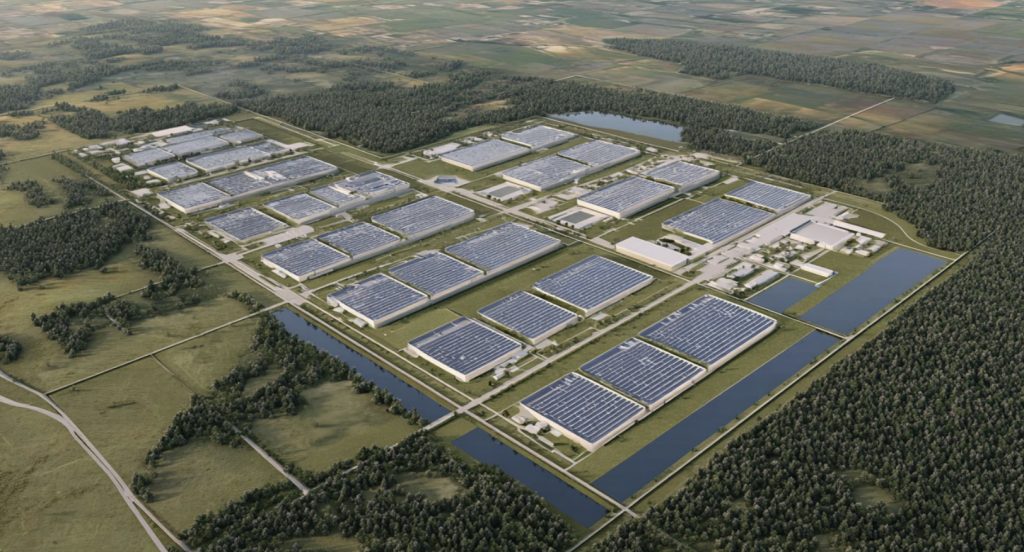
Rather than financing the entire thing conventionally itself, Meta entered a joint venture with Blue Owl. The financing was approximately $27 billion, one of the largest private-credit/infrastructure transactions ever.
So economically you get something like:
Meta says:
“I need this enormous AI facility and will support/use it.”
Private capital says:
“If Meta is effectively the customer supporting the project’s cash flows, we’ll put up billions to build it.”
Why is private equity listening to Meta? The company has a successful track record (if we ignore their roughly $83 billion loss through its Reality Labs division/Metaverse). In an interview of Mark Zuckerberg, he shared how when he witnessed AI make a coding decision that would have promoted a human engineer, he was convinced. Then he pretty much thought: Full steam, straight ahead! He has also said: if Meta overshoots spending billions on AI infrastructure, that’s better than not spending enough. Oh. Good.
The data center therefore exists because of Meta’s AI demand, but much of the financing does not initially appear as Meta corporate capex/debt in the conventional way.
That’s why analysts increasingly talk about “off-balance-sheet” or project-level AI financing. PIMCO says the five hyperscalers already have another $822 billion of future lease commitments not yet recognized on their balance sheets.
Oracle provides an even clearer example:
Look at this extraordinary deal from April.
A $16 billion Michigan data-center campus is being constructed specifically for Oracle.
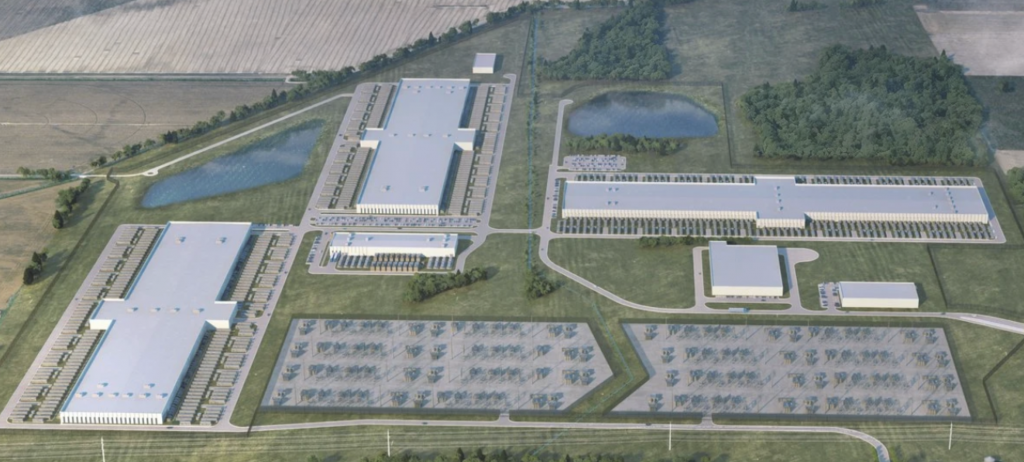
But Oracle isn’t simply spending $16 billion building it.
Blackstone and Related Digital are providing equity.
PIMCO-managed funds and accounts are anchoring the long-term debt financing.
And the campus is purpose-built for Oracle.
AI infrastructure risk is being distributed outward from Silicon Valley into the global financial system.
It it’s easy and simple to say that private equity has already put $1 trillion into AI data centers, but what is actually happening is this:
The hyperscalers are making a trillion-dollar direct investment bet, while simultaneously creating contractual demand that is pulling another trillion dollars or more of private capital into the infrastructure surrounding them.
So what’s physically happening while all these signatures and paper are being shuffled around?
Big, water-hungry, electricity-hungry boxes are springing up around the globe. They increase residents’ electricity bills, make a whirring noise that is a nuisance, consume enormous electricity via carbon-emitting energy such as gas and fossil fuels, all in the name of revolutionizing the underlying infrastructure of our digital world.
I won’t keep slapping statistics and “billions spent” figures in this essay, because it can all get frustrating, mind-boggling, and it’s already been done. I’ll end this chapter on a reflection concerning these hyperscalers that I don’t think the mainstream media is really considering:
Oracle’s founder is Larry Ellison, 82 years old, a vigorous billionaire who owns a safari, a Hawaiian island (where he once received a speeding ticket), a tennis tournament, a collection of 16th century Japanese swords, and 40% of Oracle and is obsessed with longevity. He has donated between $350-$400 million toward aging and age-related disease research since 1997 and meticulously maintains his health (teetotaler, avoids red meats, works out several hours a day). He is willing to bet his company on the AI buildout because he deeply believes in the potential power of AI to solve our problems (and maybe make rich people, like himself, live longer?) He also greatly benefited from the rise of the Internet. He has a giant ego and doesn’t want to miss out on the next tech wave.
Jeff Bezos (62 years old), founder of Amazon, is also a tech believer and worshipper, who benefited greatly from the Internet’s rise. He has acknowledged the AI bubble in multiple interviews. He has a giant ego and doesn’t want to miss out on the tech wave. His Blue Origin space plans would greatly benefit from improved AI capabilities.
Microsoft’s CEO, Satya Nadella (59 years old), started working for Sun Microsystems before joining Microsoft in 1992, leading the company’s move to cloud computing. ‘Cloud computing’ is a deviously clever marketing term that represents offshoring your compute/storage in other peoples’ data centers. Satya’s career trajectory is pinned to data center development. He has put his identity on the life into expanding Microsoft into AI.
Google was founded by Larry Page and Sergei Brin (53 years old). Sergei stepped down as Alphabet/Google’s president in 2019 and was busy being a centi-billionaire ($257 billion as of October 2026), reading physics books on his super yacht, when the AI wave came. He returned to Google to get involved. He said that he didn’t want to miss this new, exciting wave of technology, enough to leave a life of luxurious leisure.
Meta/Facebook was founded by Mark Zuckerberg (42 years old), who also dedicated his life to building technology, has a big ego, and doesn’t want to miss out on the next big thing.
Let’s also not forget Elon Musk (55 years old) who built his own AI company, xAI, to compete and not be left out of the next wave.
And once a hyperscalers is in, they can’t back out. Hence all of the interviews these guys are giving talking about the glorious future. They all just want to keep building, competing, and being on the cutting edge.
These men, ages 42-82 but mostly in their early 50s, have had their lives made enormously rich through their belief in technology. Of course technology has made our lives immeasurably better in numerous ways. But our lives are short, and if one tech wave (the Internet) brought us incredible prosperity we are apt to believe the next one will too.
The Internet has connected people instantaneously across the globe. Has that ended wars, made us kinder, made us more emphatic people?
The Internet brought us instantaneous knowledge at our fingertips. Has this rid the world of ignorance?
The Internet brought us instantaneous entertainment, music, movies, books, photos in our pockets. Has this decreased depression, anxiety, or suicide?
Will widespread, superintellience revolutionize our economy and make everything better?
Goldman Sachs, in a May report, projected 13.6 GW of new U.S. data center capacity in 2026 then 36.3 GW in 2027, for a total of 50 GW. Jensen says that it costs $50 billion a gigawatt to build and equip an AI data center. Let’s assume that Jensen is exaggerating, and cut that number in half (since he tends to inflate the numbers), that’s $1.25 trillion. This number is 96% of all tech investment that we have per year. Very soon, debt markets are going to be shut off.
These tech leaders are constantly telling us how AI will do amazing things like “eliminate money” (Elon Musk), discover new physics, and solve cancer. Finance leaders, who are heavily leveraged in AI, are chiming in, “I do think it’ll cure a lot of diseases,” (Jamie Dimon, JP Morgan Chairman and CEO), solve climate change, or provide everyone with basic income…
But maybe they are insidiously deceiving themselves to not look like wasteful fools.