
Un centre d’hébergement pour les personnes de la rue
(A shelter for people from the streets)
I worked on this with Olivia Konotey-Ahulu, a great journalist.
Subscribe below:

Un centre d’hébergement pour les personnes de la rue
(A shelter for people from the streets)
I worked on this with Olivia Konotey-Ahulu, a great journalist.
Subscribe below:

“Hi friend!
My name is Casey Smith!
I’m an instagram influencer
Who gets paid $70,000 a year
To take pictures of my babies
Trees, food, and flowers
And post them with inspiring captions!
What’s your name?”
…
Subscribe below:
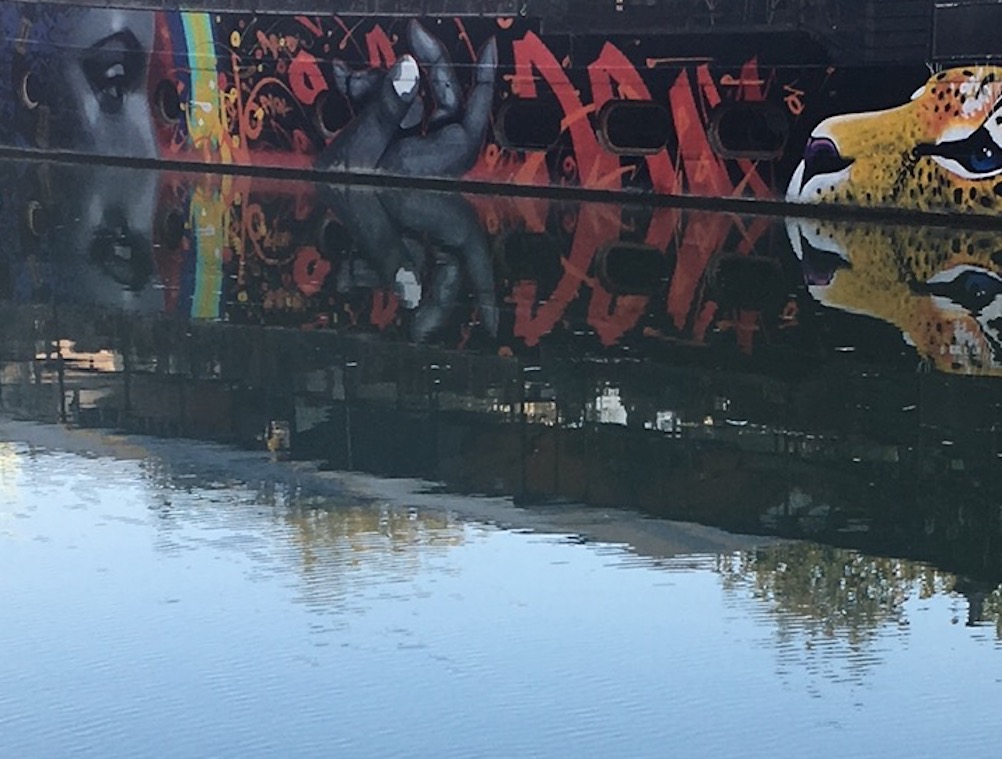
Published by Popula on November 5th, 2018
1 minute read, click on the blue button below
Or scroll down for the 4th draft (1.5 minute read) because I have difficultly letting things go.
[button color=”blue” size=”” type=”square” target=”” link=”https://popula.com/2018/11/05/never-have-i-been/”]Read Now[/button]
Being a journalism student in Paris is an endless cycle of croissants, cigarettes, café, and crossing old bridges to drink cheap champagne with my classmates. No, I’m joking, it’s not all fun and games, but living as an ex-patriot journalist for the past five months has been one of the most fulfilling and self-reflective periods of my life.
I live in Fontenay-sois-Bois, an eastern suburb of Paris, which is two stops on the RER train from the east side of the city and a 40-minute commute to my school, Sciences Po. The center of the small town is surprisingly multicultural, with Moroccan, Turkish, Indian, and Japanese restaurants next to numerous boulangeries and a church, Saint-Germain-l’Auxerrois, that was founded in the 7th century. On this morning I showered, read some newspapers online, then left my apartment.
For breakfast I stopped at one of the boulangeries in town, which is what I would consider French’s equivalent of an American diner. I ordered an expresso and a croissant that is crispy on the outside, freshly baked, tastes lightly buttered, and is delicious.
Leaving the boulangerie on my way to the RER train I passed the Librairie Mot à Mot bookstore, which is again surprisingly large given how small the town is. I’ve found that France has a stronger reading culture than the United States. I thought about how a contributing factor to the reading culture is probably due to Jack Lang, a French politician. He created a law in 1981 which enforced a minimum sale price for books to save independent bookstores. Now it’s known as the anti-amazon law. In Paris, a bookstore recently opened called Ici/Here that’s 500 square meters, the largest independent bookstore in Paris. In the past ten years 40 million euros have been invested by Semeast, a mixed economy company of the City of Paris, to buy back the leases of fifty distressed bookstores. But I digress because as a journalism student my mind is usually on bookstores and the publishing world because that is the topic for my longform journalism class.
It was a Wednesday, so I arrived at Sciences Po at 9 a.m. for my Longform class with Frederic Filloux, who created the Monday Note, a business newsletter on the economics of digital media. The class structure isn’t very different from journalism classes I had taken in the past, except the topics for each student are different, of course, because they’re French. My classmates are from Germany, Japan, Cuba, Italy, England, France, Taiwan, and more. We discussed articles that were assigned by Filloux, their style, tone, details we liked or disliked, or the reporting behind the piece. Then we each gave the class updates on our longform assignment, a 5000 word piece that is due at the end of the semester.
After my class I had thirty minutes for lunch, which is unusual for France since I thought the culture highly values taking the time for meals and not letting work interfere with life. I walked to a boulangerie nearby and eat a baguette on the go.
My next class is Video Features with Zachary Fox, which is similar to longform but uses video. We watched each others’ projects and gave feedback. We also watched professional video pieces and discussed what could be improved and what we could learn. Unlike longform, each student creates two video projects for the semester. My first project was on a homeless shelter called Valgiros, which is a place where homeless people live with citizens who have never been homeless, in order to help those who have struggled on the streets gradually transition back into society. The piece centered around a man with alcoholism named Youri who has cancer. My next piece, which is still in the works, is on how France helps people with mental disabilities, and the programs that are available.
After Video class, which goes until 2:30 p.m., I ran down the St. Germain Boulevard to my French class on the other side of campus which started at 2:45pm. This is the first French class I’ve taken in my life. It’s an A2/basic level, but the teacher speaks in French in the entire time, which I like. I’ve become aware how the French language is much more vague and “flowing” than English. I feel like this characteristic can be summed up with the phrase “c’est pas grave,” or “it’s not a big deal.” Never have I been more conscious of how “direct” and “overly-intense” I am than when I first moved to France. I realized Americans can often “get the job done,” but we also destroy things (the environment, our sense of well-being) in the process.
After my French class I walked around the neighborhood and admired the buildings. Being in classes all day caused me to feel a little stir crazy, so it was nice to walk around and get some fresh air. For the past five years I lived in New York City, where a NYC taxi driver once told me, “New York is the beating heart of the world.” But Paris has a more subtle, quiet, and mysterious beauty. The buildings in Paris have ornate moldings and small balconies, soft colored stones, intricate sculptures, and large windows that all seem superfluous compared to the soaring lines of New York City’s skyscrapers. But there’s an elegance and a sophistication in Paris that I never felt in New York. Perhaps it’s the deeper history, or the steady influence of French culture, with its emphasis on style and originality.
After walking around for an hour or two I headed home. Upon arriving in my apartment I listened to France 24 on the radio and sent emails. My work requires constant article pitching, interview requests, online research, and internet digging. Sitting in front of the computer for hours sending emails into the void isn’t very glorious. But for me, it’s worth it.
Subscribe below:
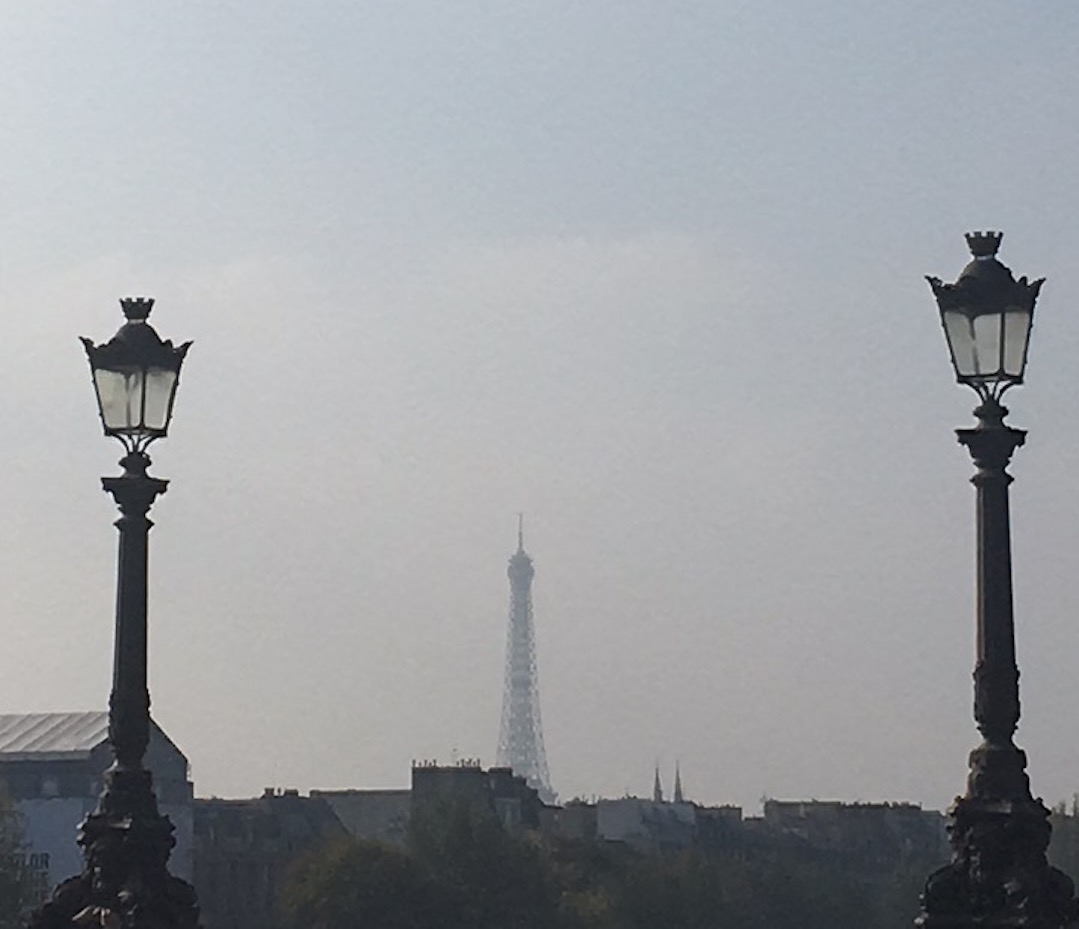
English Translation Below
Thanks to Bertrand Hauger-enard / Riddley Walker
Hier, au petit-déjeuner
J’ai bu un expresso, mangé un pain au chocolat puis
J’ai pris un train SNCF, un bien joli train.
Malgré l’achat d’un billet,
Je me suis assis sur le sol,
Car il ne restait plus de places.
Après la quiche pour le déjenuer
J’ai manqué mon train
Mais j’ai pris le suivant sans billet
Et je n’ai pas été dérangé et j’ai pris un siege.
J’ai parlé avec un Haïtien étudiant
En économie à la Sorbonne.
Nous avons convenu que Paris est trés jolie.
Dans le metro, pendant que je mange une baquette
Et que je bois mon quatrième expresso
Un sans-abri au visage en décomposition me saisit par l’épaule
Et dit: DONNE MOI ÇA, JE SUIS COMME TOI !
Plus tard, j’ai lu de la poésie pour la première fois à La Recyclerie
Situé à côté d’un KFC. C’était sympa. J’ai commondé un whisky coca,
Mail il n’y avait pas de coca, je l’ai donc bu avec du soda au gingembre.
Beaucoup de gens fumaient à l’extérieur et il y avait des cabines privées.
Dans le RER du retour, j’ai vu un homme ivre crier après une femme :
TU EST JOLI ! La femme a ri : Tu est gentil
Puis l’homme m’a donné un coup de coude au visage en disant :
Désolé, aide-moi, ourvre la fenêtre.
J’ai ouvert la fenêtre pour qu’il puisse fumer.
En rentrant à la maison, j’ai écouté Orelsan au casque puis j’ai dormi 12 heures.
Au matin, on a frappa à ma porte. Un homme en uniforme m’a tendu une carte et a dit :
Nous vous surveillons, vous et votre de vie, depuis un peu moins de 5 mois.
Voici votre carte de citoyenneté.
Bienvenue en France.
Yesterday, during breakfast
I drank an expresso and eat a pain au chocolat
Then I took the SNCF train, a nice train.
Despite buying a ticket
I sat on the floor
Because there were no more seats left.
After quiche for lunch
I missed my train
But I took the next one without a ticket
And I wasn’t bothered. I had a seat.
During the ride I talked with a Haitian student
Who was studying economics at The Sorbonne.
We agreed that Paris is a very pretty city.
At the metro, while I eat a baguette and drank my 4th expresso,
A homeless man with a decaying face grabbed my shoulder and yelled:
GIVE ME THAT! I AM JUST LIKE YOU!
Later, I read my poetry for the first time at La Recyclerie,
Which is next to a K.F.C.
It was nice.
I ordered a whiskey and coke, but they didn’t have coke,
So I had a whiskey and ginger ale instead.
There were lots of people smoking outside and there were private booths.
On the RER train back home I saw a drunk man yell at a woman,
“YOU ARE PRETTY.” She laughed and replied, “You are kind.”
Then the man elbowed me in the face and said,
“Sorry, help me, open the window.”
I opened the window so he could smoke.
Walking home, I listened to Orelsan on my headphones then slept 12 hours.
In the morning there was a knock on my door.
A man in a uniform handed me a card.
“We have been watching you and your lifestyle for just under 5 months.
Here is your citizen card.
Welcome to France.”
Subscribe below:
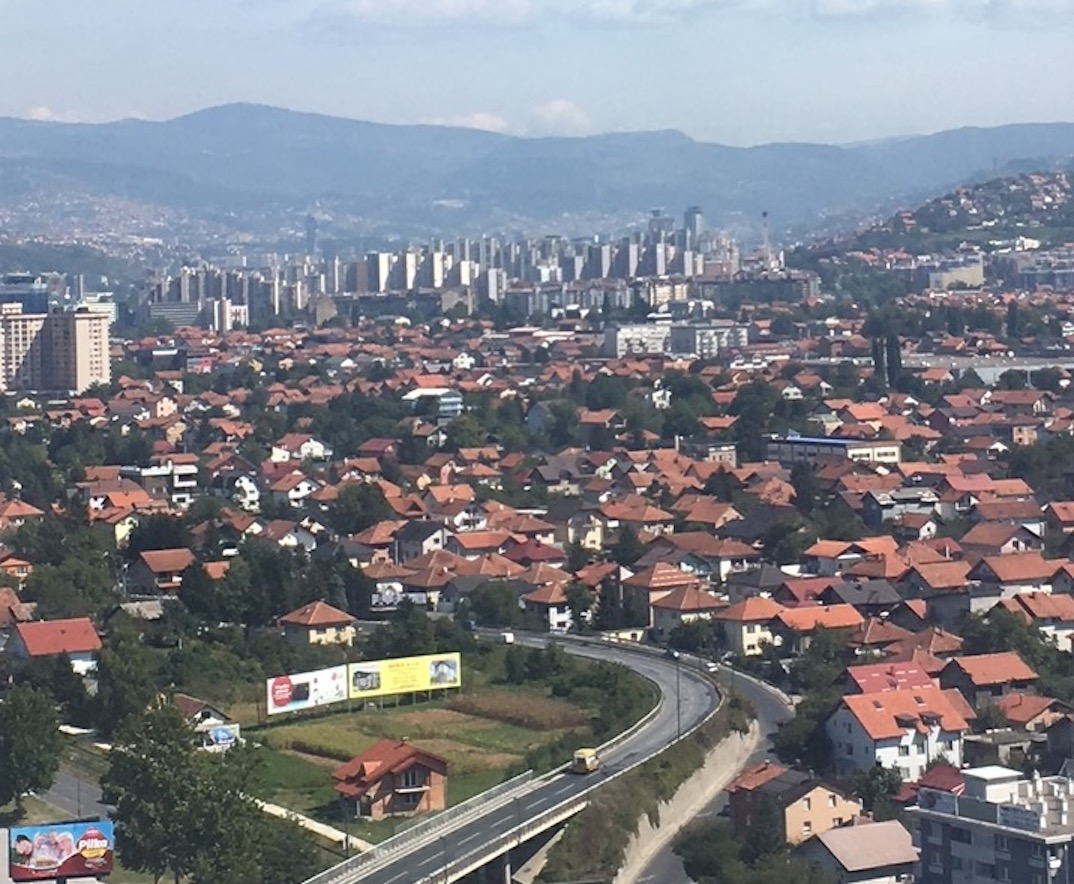
***Rough Draft In Progress, Come Back Later
Before the elections in Bosnia this past October, the capital of Sarajevo was full of hundreds of billboards advertising politicians who were running for office. These politicians were running for three presidential seats in what is, arguably, the world’s most complicated democracy:
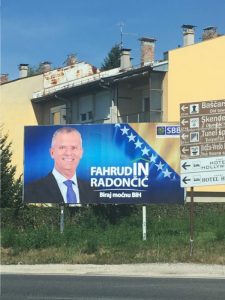
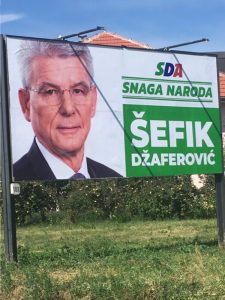
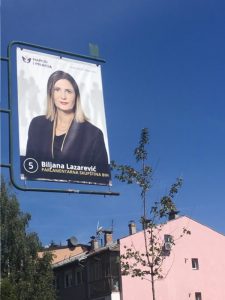
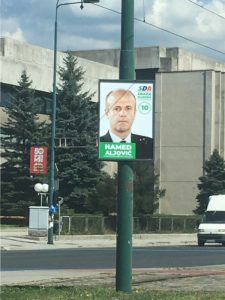
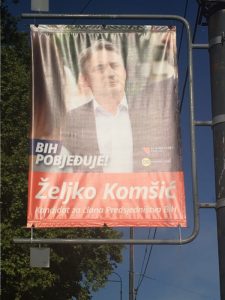
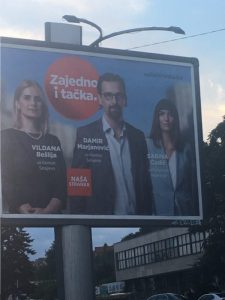
In a country that is struggling economically, that experienced the worst genocide since World War II twenty years ago, politics is one of the only place where people can find jobs and security.
“The most secure job is with the government,” says Danijela Mehic, who was born and raised in Sarajevo and gives tours to foreigners, “The only way to make a change in life is to join a political party.”
But despite the political power and gridlock, the city is attempting to become a tourist destination and to is trying to improve economically, moving on from the ethnic-cleansing nightmare of the Bosnia War.
“Last year we had four times more visitors than ever,” says Danijela Mehic, “This year there’s even more. And every year we put out the red carpet for the Sarajevo film festival.”
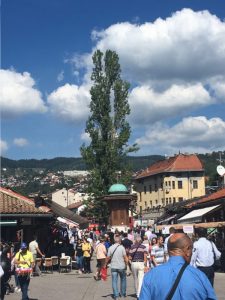
In Sarajevo today, contrary to the lingering worn-torn perspectives of most Westerners, you can find Irish pubs, luxury brand stores, outdoor cafes, a Vapiano, virtual reality booths, bustling restaurants, etc.:
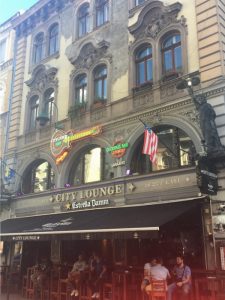
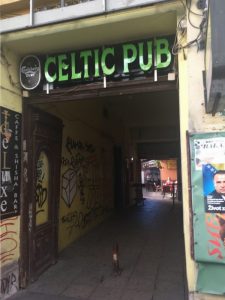
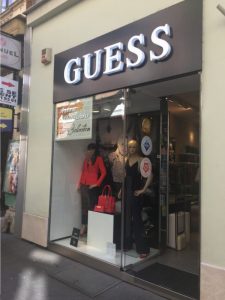
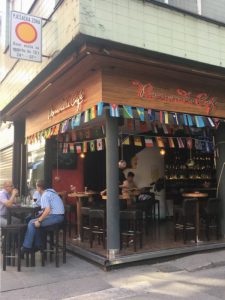

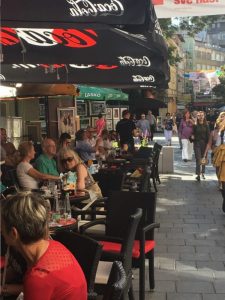
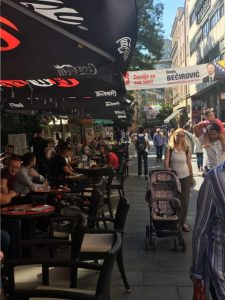


Youth (teenagers born after The Bosnian war) in a Sarajevo hookah cafe, smoking and drinking Coca Cola.
“In school we go on friend trips to the Catholic Church, to the Synagogue, and to the Mosque. We study different religions,” says Emina Ivazouié
“In school we study the dates of the war, the governmental system, but not the details of the war itself. Because there are three different opinions.” says Dledina Ivazouié
*Emina and Deledia are muslim sisters (mother is a muslim) who don’t wear the hijab because “We like our hair.”
“Our parents say we’re lucky. But if you’re young or under 18, it is difficult to find a job.” says Ali Ljuštaku, who plays guitar in his father’s band.
“Most families here are mixed.” -Ali
*
R (Melika Borovina): The only thing missing here is jobs. We’re not that developed compared to the rest of the world.”
W: (Amna Maudžo) “I think there’s still a lot of tension because of the war. I want to go abroad after school.”
R: I’m okay with being friends from different groups. But parents still say things like, “Serbs cannot be trusted,” and I’m sure they think the same thing about us.
R: Culture here is like a a meeting of cultures. It’s mixed here. You can really see everything.
[In Sarajevo it is possible to stand in one place and see a Roman Catholic Church, a mosque, and an Orthodox Church…I have pics]
R: We don’t express our nationality on the streets, but we hear it on the news, and see it in the papers.
R: I love this country. But I don’t think change will happen anytime soon. We get promises, but nothing in return.
R: The Dayton agreement causes a lot of things not to be changed.
Lana Prlić, youngest member of Bosnian Parliament, born during the war, mother is Muslim and father is Catholic (they raised me in the way to have knowledge about each religion and tradition and to choose by myself what I what to be. And I choose to respect everything and everyone and to be atheist.”) —-perhaps Q and A?

I became political active when I was 17 and still in high school. Why?
Because I wanted to change something, I wanted to make society in my
town Mostar more healthy without borders that are made by those who
enjoy luxurious life for over two decades based on divided society. Because
Mostar and Bosnia and Herzegovina are multicultural. SDP was my
choice [political party] because tradition, history, program of this party had the most
similarities to the way I was raised, to respect everyone, do not judge and
divide people only on the criteria are the good or bad ones. I did not want
to give up my country, because that is the country where my parents are,
my friends and all memories. I want to fight for next generations, because
generations of my grandparents barely survive due to low pensions (cca. 100
euros minimum), generations of my parents lost their youth in the war, and
my generation lost childhood explaining ourselves are we bosniaks, serbs, or
croats why today my generation is leaving. For the record, in the last 4
years 5% (80,000) of population of B&H left this country.
A:The biggest issue is that youth do not vote and if we add to it fact that elders
mostly vote we can conclude that this country is ran by older generations.
Youths have a power to change power every elections and they do not use it
because of the complicated system and political culture that presented politics
to youths in B&H as something non changeable. But they can change it, SDP is an example how youths can change help and recover party, I am sure that they
can do it with the country as well but they need opportunity. At the other
hand, youths today are involve in many NGOs, and others but unfortunately
mainly they see political party as the way of employment, and again for it
political culture is the main cause.
Obviously Bosnia is the phenomena country where with the less of 4 million people
we do have three presidents, of each ethnic group and mostly they represent
party interests not state interest. From 2014-2018 we had 3 presidents and non
of them made decisions in Bosnia and Herzegovina. One of the Presidents on his
meeting do not even play on hymn of Bosnia and Herzegovina. I will repeat
again you cannot represent country which you do not feel yours. We need
people in Presidency which will represent every each citizen of Bosnia and
Herzegovina no matter their ethnic group, because Presidency is the mirror of
our country and clearly in the last 4 years it was broken.
Dayton Agreement had a goal to establish peace here, and that is the most
important thing. But DPA put this country in the hands of few families which
run nationalists parties, this country cannot function and cannot be healthy if
people here are divided in the constitution in the core of political and social
system. Bosnia and Herzegovina should be country of all its citizens no matter
where they live. DPA is discriminatory, by that education system as well,
electoral system as well. What we can expect from the country in which
constitution is discriminatory? How to develop? How to solve life issues, when
on every issue which is not in interest of nationalist parties they have right on
national vital interest or ethnical veto? It is clear that DPA was an experiment
and it failed together with the holders of its, OHR.
This country should be country of all its citizens led by
those who feel this country as its own, by those who listen people and do have
responsibility towards them, led by people who found life issues way ahead
national issues. Nationalist’s countries are mostly poor countries, and
unfortunately Bosnia is every year on the bottom of every list. This country
need rehab and I hope at Sunday my party will get a chance to make B&H
country for all together with our candidate for the presidency Denis Becirovic
who we represent every each people in this country no matter its name,
religion or ethnicity. My biggest wish is to make country where people will
come and youths return from Western countries, so parents do not longer speak
with their kids by Skype or see them only during the holidays.
Boriša Falatar….ran for president, but lost. Waiting on his response to my second email…
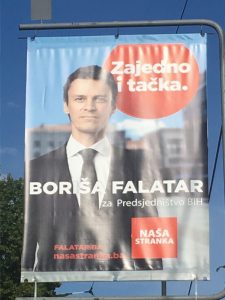
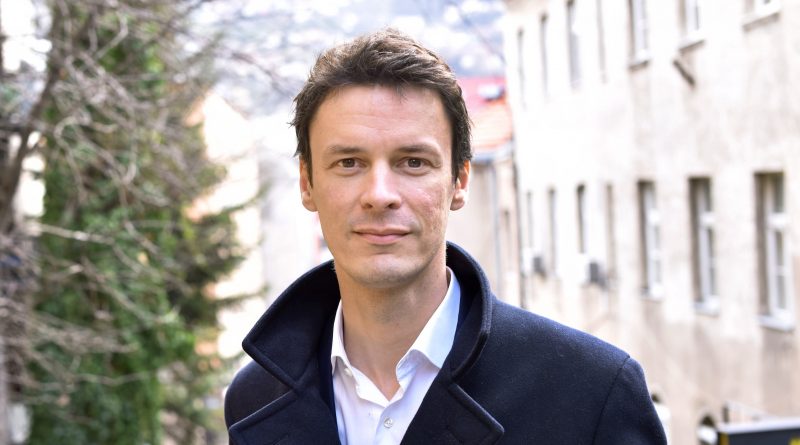
His father died when he was 8, his grandfather was in the concentration camps. When Borisa was 16 the Bosnian War started on April 5th, he was at a sleepover with a friend when his friend’s father woke him up and said, “Sarajevo is occupied.” They went to the protests.
“At first, the war was super boring.” But nobody could go out. Everybody was in shelters. He was watching movies. No electricity. “You don’t think it’s dangerous.”
Danijeja (tour guide) spent 3 months underground. She can’t go to the Bosnian War museum because it fills her with pain. She married during the war and had a child…”a way to have something behind yourself.”
Boris’s paternal grandfather is Croatian. His paternal grandmother is Serbian. His mother is muslim. He grew up in a Jewish community. The war for me was: what the hell is happening? Different parts of my family are being blamed. Who am I?
Mother was shot and killed during the war when he was 18.
Worked for the U.N. as an interpreter.
I never settled in one place in my life. Bosnia is my home. Lost 5% of the population in the last 4 years. People live with photos of their children.
1.5 years ago he traveled around Bosnia, spoke to activists. There’s not unifying force.
All the presidents here are like Trump. Bt they never achieve anything. We have three Trumps.
It’s difficult to get media attention. Peace-loving Ghandi doesn’t make headlines. “Love each other,” isn’t clickable.
“Screw you assholes!” that is clickable.
My mission isn’t all about getting elected. It’s about healing the wounds of this country.
No country is as diverse as Bosnia.
When Europe was killing itself 500 years ago, we were living together.
Politicians here scare you with the worst possible option. Entrench yourself in a political party or the other will win.
Despite Bosnia’s difficulties and political in-fighting, there are those who are working towards a better future, and a youth that is open to acceptance and moving forward.
Mind is burning
Another petty crime discussed by the jury
Whining and already wasting in a hurry
And time is racing and turning
Over brain-storming hardly learning
Insane stories this wooden floor is worn
Out are more poems just boring torn
Over these past glories subconscious oratories
To the surface not sure the purpose yet perhaps the worst is
Yet to boast toast roast and coast
For these caught thoughts ought naught
To be
Forgotten I guess unless
A lot is in
A night I might bite
My lip a bit that’s it oh shit just
Slightly with tightly
Closed eyes yet who knows
Out the window the wind blows, I see three tall trees in throes
Now I’m taking stock of the alarm clock
Spinning over my bed my body’s like lead it’s dead
Unlocking the phone so
Postpone the
Morning’s near
Subscribe below:

(For English, scroll down)
J’ai le feu
Mais j’ai toujours peur
D’être paresseux
D’ailleurs
Les rêves et les espoirs
Ils s’estompent et se désintègrent
Comme tu veux
Putain, ce n’est pas un jeu
Mais ce qui est enjeu ?
Voir les même choses encore et encore
Entendre les même choses encore et encore
Penser les même choses encore et encore
Toujours
Trop d’efforts
Dans un monde
Qui est mort
Qu’est-ce que je cherche ?
Réveille-toi
Tais-toi
Merde
Toujours se sentir comme un connard
Des mots et encore des mots
Trop d’temps à lire d’vieux livres comme si je me trimballais une vielle charrette bancale
Et je sais que c’est de ma faute
Je n’ai
Jamais
Compris
Mon esprit
Une autre tentative stupide
There’s this fire in me
Yet I’ve always been terrified
Of being lazy
Grappling
With dreams and hopes
That are fading and disintegrating
As you like it…
Fuck, this isn’t a game
Yet what’s at stake?
To see the same things
Again and again
To hear the same things
Again and again
To think the same things
Again and again
I’ve always tried too hard, too much
In a dead world that’s becoming dust
What are you searching for?
Wake up
Shut up
Shit
I always feel like bastard
These words, more and more words
I think I’ve wasted too much time
Reading old books
Like I’ve been pulling an old, useless, broken cart
I know it’s my fault
I’ve never understood
Who I am
Here’s just another
Stupid attempt
Subscribe below:

I’m smoking a cigarette with the warm-hearted bus boy.
He’s got a Cali-surfer mixed with Greased Lightnin’ vibe
Without the 1970s pep rally pep nor the beach bum laziness…
We’re working in Union Square, 12 hour shifts shuffling between tables
Of oblivious rich New Yorkers and duped tourists drinking
$18 watered-down martinis eating $12 re-heated microwave-crostinis
We smell like the dumpsters on the other side of the playground fence
Where there are children chasing each other lost in their innocence
While the sweat steadily dripping down our aching backs that’re torn from carrying
Bins/trays and he generously passes me the lucky strike pack for another
And we joke about something I can’t remember
My memory’s no good about this depressing blur of time-my-in-life-but-I do
Remember feeling quietly lucky that I was moving steadily, all-bite slowly, towards
Great literature the world had never seen and that him and I were already
Far from these menial jobs, petty bosses, little restaurant conniving dramas
Where many sad souls reconcile themselves to mundane lifetimes and dark mantras
And late-night subway rides on the G with no relief and no sleep
But later, after closing
Surf-Lightnin’ invited me
To Central Park with a Thespian Texan who conveniently had a guitar
And we drank cheap beer from brown paper bags
And shared our own emo chord progressions
Like the silly heartbroken boys we (are) used to be + had ambitious conversations
Cause Cali was going back to Cali soon to be/become a great actor
His fire and certainty were contagious
These small flickering moments for me were bright and kept my
Head tilted towards the expanse of a starless sky
And nothing would stop us we knew we were right
And now I see he’s starring in a Netflix special with Sabrina and witches
While I see over her shoulder a busboy fixing a torn napkin on a table
Sweating by the Seine while I’m being handed a cigarette from a sultry Parisian
Still a long way to go, but Cali and I knew and still know
We wouldn’t stop back then
Remember when
Subscribe below:
8.5 minute read, scroll down for today’s (10/2/18) conservative response
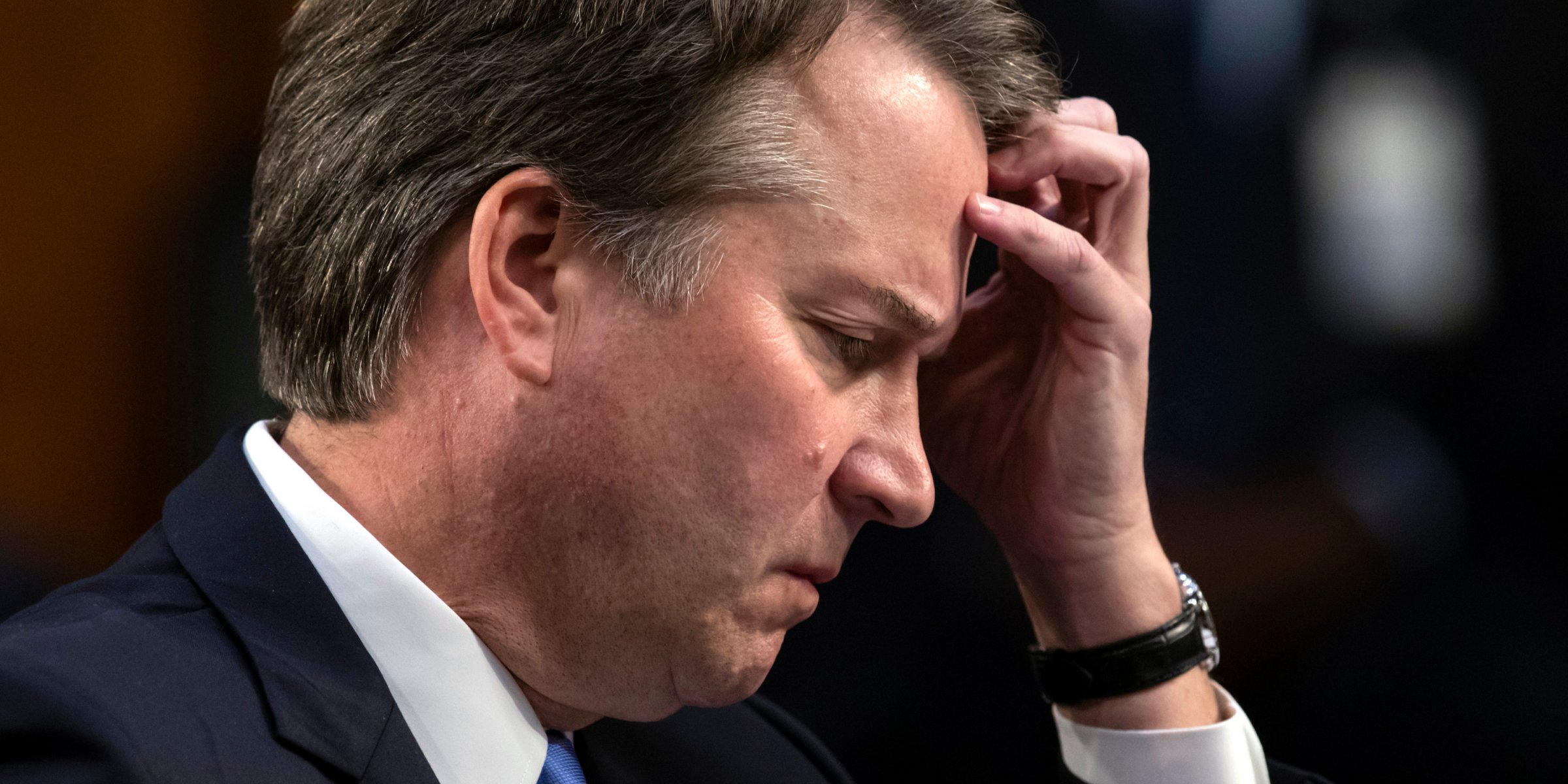
This past week America has been politically torn in half by Christine Blasey Ford accusing Brett Kavanaugh, a Supreme Court nominee, of a sexual assault that occurred 36 years ago. An F.B.I. investigation of the sexual assault has begun, but I believe that it will be checked and halted by various political forces, and that nothing will come from it. The partisan divide in America has been made particularly clear to me through my Facebook newsfeed, which is about 50/50 conservative/democrat, and I’ve tried to engage in numerous dialogues with both conservatives and democrats. Here is the best one, that doesn’t devolve into conspiracy theories, hatred of the patriarchy, or personal attacks:
*
Something that I keep reading from conservatives regarding the Ford-Kavanaugh testimony is this: we need more evidence, Ford’s claims may not be true, so we shouldn’t acknowledge them to make our decision. For example, from a conservative article:
“That Kavanaugh’s confirmation hearing is not a criminal trial is, of course, true. But this fact does nothing whatsoever to change the logic of how civilized, decent, truth-respecting people assess claims of wrongdoing, no matter how paltry or grievous.” -Donald J. Boudreaux
The fact that Kavanaugh is being interviewed for a lifetime seat on the highest court DOES change how people assess claims of wrongdoing. How? A baseless, evidence-less accusation of something heinous must be listened to. Why? Because it’s heinous and coming from someone reasonable, because it is someone coming forward about a sexual assault, putting her life and family through hell. Do conservative writers know what it takes to come forward about a sexual assault? What do they think her motivation is? Political? If they truly believe her motivation is political, then there’s nothing I can (or want) to say concerning that theory. But even assuming that Ford’s claim has ZERO evidence, the severity of her claim and the situation of the accused is ENOUGH to change how “truth-respecting” people assess claims of wrongdoing.
Every right-leaning response I’ve read on this issue seems unable (or unwilling) to hold those two ideas in the mind at the same time:
1) Kavanaugh is engaged in a job interview for a lifetime appointment as a judge of the highest court, so accusations of a heinous crime from a citizen MUST be listened to.
2) The act of coming forward about a sexual assault, despite a lack of evidence, means she should STILL be listened to.
Focusing incessantly on the idea “we need more evidence” belittles what it means to come forward about a sexual assault and ignores the special, highly-scrutinized nature of vying for a Supreme Court seat.
Jack, I will be the first to say that someone with an assault allegation needs to be heard, not ignored or belittled. That being said, saying “we need more evidence” is exactly what is needed when someone comes forward with an assault allegation, especially during a question about a supreme court seat! If you are willing to accept an accusation because of how sincere someone is then you are in the incredibly dangerous territory. You are willing to destroy a potentially innocent person on the word of someone because it was hard for them to come forward and a painful experience but fail to consider that they may be remembering incorrectly, have a false memory or recollection or, rarely, be lying, no matter how sincere they appear to be.
The Duke Lacrosse sexual assault allegation is ample proof of the problem of accepting an allegation without evidence – because that lady sounded super sincere and she lied about all of it (she admitted she made it up). But your logic requires that we should believe her, no questions asked – do you actually think, given her lie, that we were right to believe her just based on her accusation? Ultimately, the problem is, one cannot base their opinion on emotion or how hard something is to do, or how much grief it may cause. One also cannot base it on what position someone is going for, lifetime or otherwise. those standards are subjective, being different for each person or group. It is a dangerous way of thinking precisely because everybody can have their own story and those stories can be diametrically opposed, equally compelling, and yet, they cannot both be equally right.
One must have an outside standard against which everything is measured (this does not mean that the standard isn’t abused, but you have to have a standard). That is the point that is trying to be made. If you do not have a standard or that standard is a poor one (presumption of guilt for example) then you have lost your ability to objectively judge a situation. Using the logic of people who claim that we must believe people making accusations of assault simply because they made those accusations and that includes those without evidence, is the same logic that was used at the Salem Witch Trials in the late 1600’s (I’m not comparing sexual assaults nor sexual assault allegations to this historical situation, simply the logic of believing an accuser [no matter what the accusation is) and presuming guilt instead of innocence] – please do not misunderstand this). The difference is that men controlled the proceedings and not any women. The logic, however, is the same – the presumption of guilt, mob rule, hysteria, exaggerated grievances/concerns. It is just repackaged and given a more modern, emotional face to it so as to garner sympathy and support.
The logic (guilty until proven innocent because of the seriousness of the type of crime/allegation made) will ultimately lead to totalitarian state tactics, such as those that ISIS uses. It will lead to mob rule and fulfill the words of the high ranking Soviet leader, Lavrentiy Beria, who famously said – “show me the man and I will show you the crime!” His point being, name a person and I can convict him because guilt is presumed before innocence.
The point is, people may want to jump to conclusions based on emotion, they may have their opinion swayed by the severity of a charge, but at the end of the day they must take a step back and remember, you are innocent until proven guilty. They must remember that whatever their initial reaction, stepping back and reversing roles will bring a critical perspective and allow for seeing the logic and emotions from both sides. They must seek the truth, and to determine truth they must have evidence. Without which, an allegation is just that, an allegation, no matter how sincerely presented.
-Conservative (he desires to remain anonymous)
Hey J.-, two things to consider:
1) How are you and I both measuring the sincerity of the accusation? You write, “If you are willing to accept an accusation because of how sincere someone is then you are in the incredibly dangerous territory.” I personally, narrowly judge that Ford is sincere, despite a lack of evidence, for these reasons:
a) Ford discussed the assault and seemed to indirectly mention Kav with her therapist in 2012.
b) She wanted to remain anonymous.
c) She’s a professor at Palo Alto and a research assistant at Stanford.
d) She testified despite being terrified.
e) Her testimony seemed convincing to me/a reasonable human.
f) Everything I’ve read about Kav (heavy drinker, gambling debt, the Yale classmate’s full statement of Kav being aggressive and belligerent in college) and seen of his testimony (histrionics, anger) makes me think that he could have done this.
g) Coming forward about sexual assault is extremely difficult.*
Of course these reasons are extremely biased with logical fallacies (ad hominem, etc)., distorted by my limited experience, and would not hold up in a criminal court case (but this is not a criminal court case, this is a job interview, see reason 2). Do you not consider Ford to be sincere? Why not? I leave it to the senate to judge the sincerity of Ford. If you’re thinking, “But her sincerity doesn’t matter! It can’t be measured! There were no witnesses! It was a long time ago! Slippery slope!” Keep in mind that Kav is not going to be sent to prison based on someone’s evidence-less sincerity, he is going to experience really shitty publicity (a risk when you apply to the Supreme Court) and he may not get a job…(meanwhile don’t forget that Ford may, possibly, be telling the truth and have experienced years of trauma and suffering at Kav’s expense).
2) This is a job interview where there are other qualified candidates. You used the phrases “incredibly dangerous territory,” and “destroy a potentially innocent person.” But, again, we are talking about a job interview. I do consider that Ford may be remembering incorrectly….but this risk is justified by the fact that this is a job interview for the highest court. (And again please do not forget, she could be remembering correctly and could actually be the person who’s life had been destroyed.) Do you believe that Kav is being destroyed by this accusation, if it’s false? Are you subtly weighing his “public destruction” as more important and valid than Ford’s past destruction if she is telling the truth?
I don’t think your comparison to duke lacrosse is apt, because those players were not applying to become Supreme Court judges. And the allegation Ford makes is not to be accepted outright, but listened to and considered, amongst competing ideas and testimonies. In addition, a 2010 study by Violence Against Women found that only 2-10% of rape allegations are false, so I think it’s dangerous to focus on a case that is not representative of rape allegations.
You are right that when making decisions we must not be completely swayed by emotion or by grief laden stories that can be compelling, but false. But I disagree that an opinion cannot be influenced by the “position someone is going for” when this person is being accused. Why? If someone is going for a position that requires the person to be moral, just, and a leader of our country, then our opinions must be more sensitive to all kinds of accusations, even highly potentially false ones, opposed to someone applying for a job that doesn’t require them making decisions on what is justice for a nation.
*I want to end this comment with an emphasis on reason:
g) Coming forward to accuse someone of sexual assault, especially someone who is powerful, is extremely difficult. Do you not think so? Of course there’s a risk that she could be wrong. But aren’t you willing to take this risk if Ford is willing to put her life and family through such difficulties?
Again, I appreciate your response, and I hope you respond to this so I can clarify my thoughts, and better understand what many right-leaning people are thinking.*
Jack, there were several questions mentioned so I’ll try to respond in two ways. First, I’ll give some consideration to Ford’s case and the question of sincerity vs credibility.
For the sake of balance, I would agree that her career and education level should be considered when assessing her credibility. However, I would suggest that several things weigh heavily against this and ultimately demonstrate that she should not be considered credible in what she is saying.
Secondly, her memory of recent events was problematic. She stated several very strange things about the polygraph tests that were highly suspect. For example, she said she did not remember the exact day she took it. How can that be? This was only two months ago, and, given the public spotlight she was thrust into, it is very odd that you wouldn’t know these details – even if you looked them up the day before to make sure you knew your facts. Furthermore, her description of how the polygraph felt was abnormal. She described it as being a smothering experience on her whole body. What is odd about this is that Polygraph machines don’t have anything even remotely resembling a full body contraption. It’s normally just sensors on your fingers and a blood pressure type cuff on your arm, hardly a full body, smothering experience.
(I’m working on a reply. Feel free to direct message me if you’d like to give your input on this discussion)
Subscribe below: